

Kia's 2026 K4 Turbo Hatch Is All The Small Car Most People Actually Need
And if they're reasonable enough to buy one, it'll save them tens of thousands over the average MSRP today
Americans love buying more car than they need. Bigger SUVs, taller crossovers, three rows of seats that spend most of their lives empty, and monthly payments that would've sounded absurd not that long ago. Frankly, plenty still sound absurd right now as buyers pay four-figures a month for the car they drive before we consider insurance.
Meanwhile, the 2026 Kia K4 Hatchback quietly makes a compelling argument that most people could get by, nay, enjoy something much smaller and cheaper. When we first drove the K4 Hatchback in January, we came away thinking it might be one of the best arguments yet for skipping a small SUV.
Quick Facts
| Model | 2026 Kia K4 Hatchback GT-Line Turbo |
| Engine | 1.6-liter Turbocharged four-cylinder |
| Transmission | 8-Speed Automatic |
| Output | 190 Hp (142 kW) 195 lb-ft (264 Nm) |
| Fuel Economy | 26 MPG City / 33 MPG Highway / 28 Combined |
| Dimensions | Overall Length: 4,440 mm (174.8 in)
Overall Width: 1,850 mm (72.8 in) Overall Height: 1,435–1,450 mm (56.5–57.1 in) Wheelbase: 2,720 mm (107.1 in) |
| Cargo | 22.2 Cu-Ft (59.3 Cu-Ft with rear seats down) |
| MSRP | $28,890 + $1,245 Destination |
That drive included Los Angeles traffic, gravel roads, highways, and even a run through Angeles Crest, but it was still just that: a first drive. Now we've had a K4 GT-Line Turbo for a full week, living with it, hauling stuff in it, and using it as an actual owner might.
And after all that, the argument for spending another $10,000, $20,000, or even more on the average new car has only become harder to make. Read on to find out why this is the car most people should be shopping for.


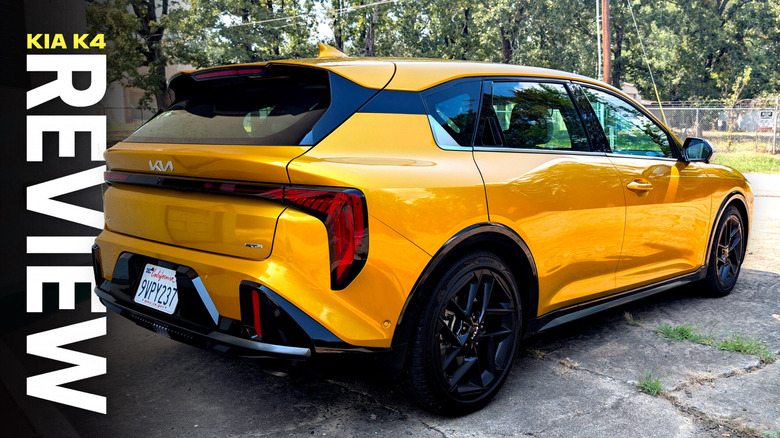
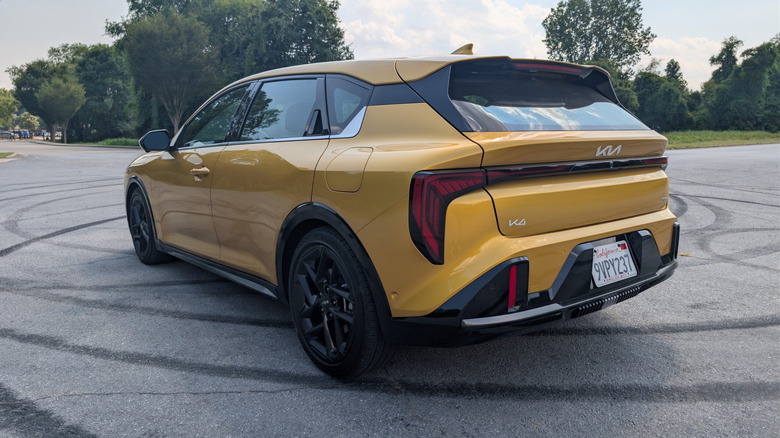
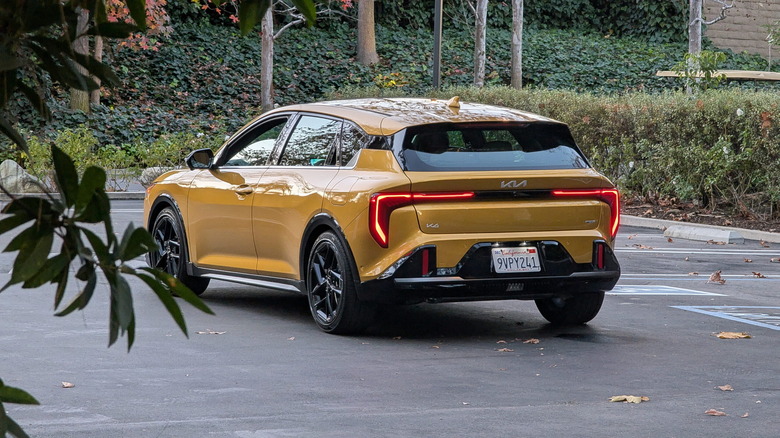
Back in January, we called the K4 Hatchback a "wagon in disguise," and several months later, we're sticking with it. The hatch is roughly 11 inches (279 mm) shorter than the K4 sedan while riding on the same 107.1-inch (2,720 mm) wheelbase. The result is tighter proportions that, to our eyes, work considerably better than those of its four-door sibling.
There's still plenty happening visually. Kia's vertically oriented lighting is distinctive, the rear door handles hide near the C-pillars, and there are enough creases and geometric shapes to make the K4 unmistakably modern.
From some angles, it's almost wagon-like. From others, particularly around the chunky rear quarters, it looks like someone took a small crossover and pushed it closer to the ground. Either way, it's far more interesting than an affordable compact car has any obligation to be. More importantly, that shape isn't just for show. The really clever stuff becomes apparent when you climb inside.
A Cabin That Doesn't Feel Compact
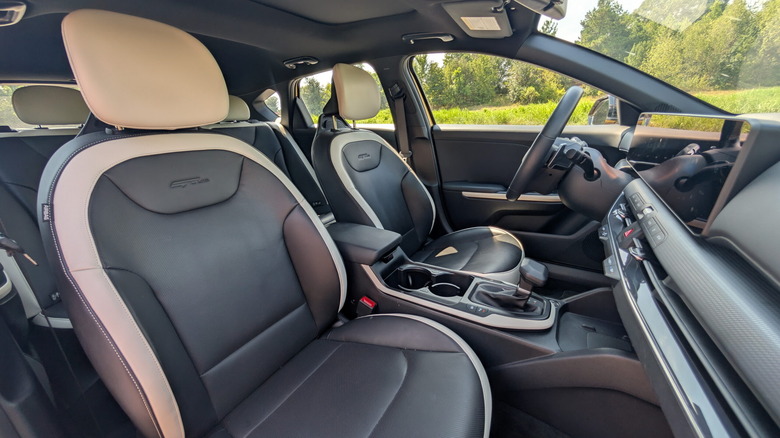
I'm 6-foot-6. That's generally bad news for whoever gets assigned to sit behind me in a compact car. At the first drive, I adjusted the driver's seat to my normal position, climbed into the rear, and discovered that I could actually fit behind myself. A week with the car only reinforced how unusual that is. There's legitimate room for four adults here. Not "technically five seatbelts, therefore it's a five-seater" room, either. Kia claims 42.3 inches (1,074 mm) of front legroom and 38 inches (965 mm) in the rear, and the latter figure is particularly impressive considering the car's footprint.
The seats remain comfortable over longer trips, with enough lateral support to keep occupants in place without pretending this is something from Kia's dearly departed Stinger family. Please bring that back, Kia. Up front, the dashboard follows the brand's current screen-heavy design language. There's a 12.3-inch infotainment display and, depending on equipment, a 12.3-inch digital instrument cluster, with a smaller climate panel nestled below them.
More: Kia Might Offer A Manual K4 Hatch In America, But The Wagon's Another Story
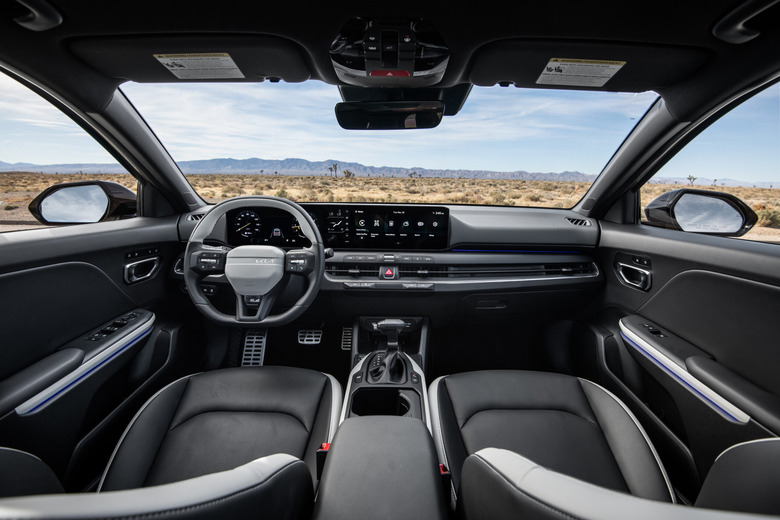
Better still, Kia hasn't fallen completely into the touchscreen abyss. Real buttons and switches remain for frequently used climate and media functions. My complaint from January about the insufficiently knurled steering-wheel scroll wheels remains, but that's nitpicking in an otherwise intuitive cabin. There are some cheaper plastics if you go hunting for them. Nobody is going to confuse this with a Genesis. Then again, our loaded tester costs around $33,000, and the stuff you interact with regularly feels appropriate for the money. But passenger space is only half of the K4's trick.
The hatchback offers 22.2 cubic feet (629 liters) behind its rear seats and 59.3 cu-ft (1,679 liters) with them folded. Those numbers sound good. Living with them is more convincing. During our week, I threw my hockey goalie bag into the back. It fit without drama and without folding the rear seats down.


For anyone unfamiliar with goalie equipment, this isn't some duffel bag with a pair of shoes and a water bottle inside. It's enormous. If a compact hatchback can swallow one without sacrificing passenger space, there's a pretty good chance it'll handle the luggage, Costco run, stroller, camping gear, or whatever else most owners throw at their daily driver. That's where the K4 starts undermining the case for a small crossover.
Sure, something taller might provide easier loading or a little more outright volume. But how often do you actually need it? The K4 gives you genuinely useful cargo capacity without making you drag around the additional size, weight, and typically higher price of an SUV every single day. And thankfully, the driving experience doesn't make you pay for all that practicality.
Driving Impressions: Enough Power Is Enough
Let's establish something immediately: the K4 GT-Line Turbo isn't a hot hatch. It wasn't one when we drove it through Angeles Crest in January, and an extra week hasn't magically transformed it into one. The turbocharged 1.6-liter four-cylinder produces 190 hp (142 kW) and 195 lb-ft (264 Nm), all sent to the front wheels through a conventional eight-speed automatic. That gearbox remains one of the powertrain's better qualities, particularly in a segment increasingly dominated by CVTs.
The K4 gets away from a stop quickly enough, has useful midrange torque, and rarely requires much planning to merge or pass. Paddle response is reasonably quick, shifts are clean, and the powerband is easy to work with. Push harder, and the chassis is predictable, with limited body roll and progressive understeer as you approach its limits. The brakes are particularly easy to modulate, and visibility is good by modern hatchback standards. It's competent. It's balanced. It's even mildly entertaining. It just isn't particularly exciting.
The steering communicates less than we'd like, and that coarse engine note we noticed during the first drive hasn't gone anywhere. Load the turbo four heavily at low revs, and it can sound downright gravelly. Still, a week of normal driving highlighted something that Angeles Crest couldn't: none of that matters very much Monday through Friday.
The K4 is comfortable, easy to maneuver, reasonably quiet, and powerful enough that it never feels like you're being punished for buying the sensible car. I averaged better than 30 mpg during my time with it without making any particular effort to save fuel, beating its EPA combined rating of 28 mpg. It's enough performance. Enough economy. Enough refinement. There's a theme developing here.
Plenty Of Tech But Without The Luxury-Car Bill
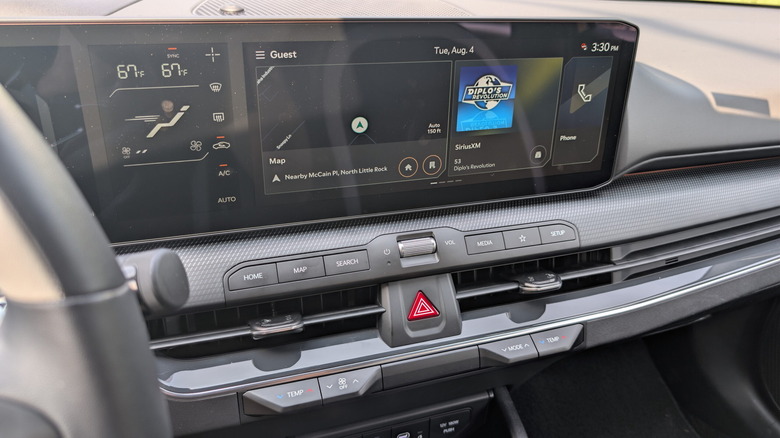
Kia has also loaded this thing with the kind of technology that would've required moving several classes up not long ago. Wireless Apple CarPlay and Android Auto, adaptive cruise control with stop-and-go, lane-following assist, lane-keeping assist, four USB-C ports, and a wireless charging pad are all available without getting anywhere near luxury-car money.
Higher trims pile on goodies including ventilated seats, a heated steering wheel, Harman Kardon audio, memory settings, a surround-view camera, blind-spot cameras, and Digital Key 2.0. Our GT-Line Turbo was particularly well equipped, although it still uses Kia's older Highway Driving Assist rather than the considerably better HDA II system.
Some drivers will also find the sheer number of electronic helpers a little overbearing. That's hardly unique to Kia these days, though, and most of the systems are straightforward to understand and adjust. The bigger surprise comes when you remember what all this costs.
About That $33,000 Price Tag
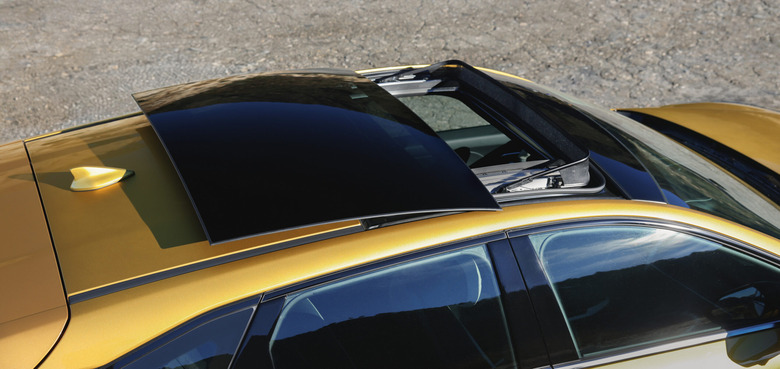
The 2026 K4 Hatchback starts at $24,990 for the EX before the $1,245 destination charge. The GT-Line costs $25,990, while the GT-Line Turbo starts at $28,890. Our loaded Turbo landed at around $33,000. No, that's not "cheap" in the way compact cars once were. But look around at what Americans are actually buying today, and the perspective changes quickly. It's remarkably easy to walk into a dealership intending to buy sensible transportation and leave with a $45,000 or $50,000 crossover. For what?
The K4 has five seats. It'll comfortably carry four adults. It has adaptive cruise control, heated seats, big screens, wireless smartphone integration, and enough available cameras to document a moon landing. Fold the seats down, and it'll swallow genuinely bulky cargo. The Turbo isn't painfully slow, and it'll return around 30 mpg.
Read: Kia Is Killing Its Flagship Luxury Sedan After Sales Cratered 87%
Families who regularly use three rows need three rows. People who tow need something capable of towing. Those living where ground clearance or all-wheel drive genuinely matters should shop accordingly. But that's not everybody. In fact, once you start looking at what else $30,000 buys, the K4's position gets even more interesting.
Competition: What Else Is Out There?
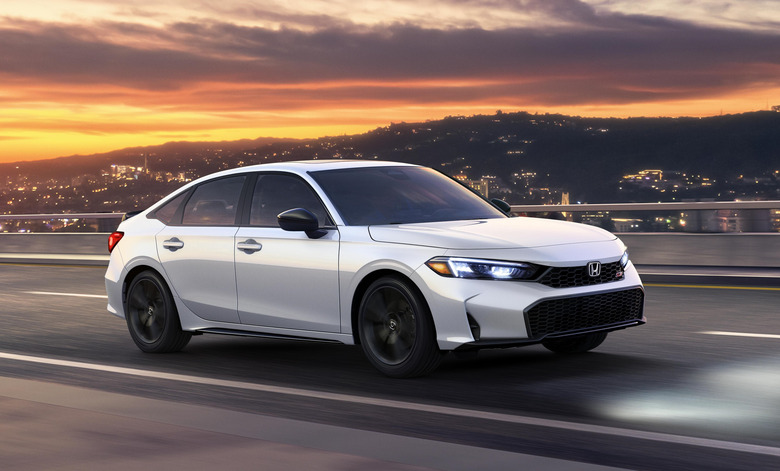
The Honda Civic Hatchback remains the elephant in the room, particularly in hybrid form. It's quicker, considerably more efficient, and exceptionally polished. If fuel economy is a priority, it's difficult to argue against. The Mazda3 Hatchback remains the driver's choice. Its available turbocharged engine and AWD give it performance the Kia can't match, while its chassis feels considerably sharper. The trade-off is less space, worse efficiency, and a higher price.
Toyota's Corolla Hatchback is efficient and has a reputation for dependability, but it's comparatively cramped and underpowered. The Subaru Impreza offers standard AWD, but that's about the strongest card it holds against the Kia. Then there's another competitor we probably shouldn't ignore: the compact crossover.
That's arguably the vehicle the K4 Hatchback needs to beat more than any conventional hatchback, because that's where buyers have been migrating for years. And unless you genuinely need the extra ride height, AWD, towing ability, or cargo room, the Kia makes spending considerably more awfully difficult to justify. Which brings us back to where this started.
Verdict: Don’t Overpay For What You Don’t Need
Our first drive of the K4 Hatchback left us impressed. A week with one hasn't uncovered some fatal flaw hiding beneath the surface. If anything, it's done the opposite. The K4 isn't the car I'd pick for a Sunday morning blast down a great road. It isn't particularly fast, exotic, luxurious, or emotionally stirring. I'd still love to see Kia build one with 250 horsepower, a limited-slip differential, and a manual gearbox. Throw in AWD, and we'd really start getting unreasonable. But that's what an enthusiast (i.e., me and plenty of you) wants.
What most people need is something comfortable, efficient, affordable, spacious enough for four adults, capable of carrying a surprising amount of junk, loaded with useful technology, and not miserable to drive. That's the K4 Hatchback.
The average new vehicle transaction price in America has climbed to a level ($50,000) that would've sounded like luxury-car money not terribly long ago. Yet here sits a well-equipped car at roughly $33,000 that handles nearly every normal automotive task without asking its owner to make many meaningful sacrifices. Maybe the K4 Hatchback isn't too little car for most people. Maybe most people are simply buying too much car.


