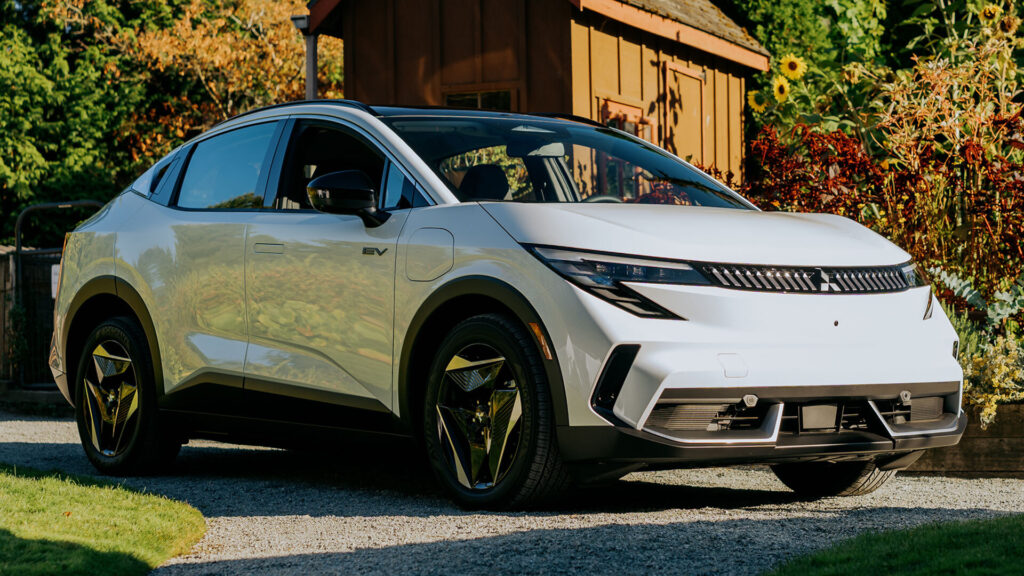
- Honda has become the latest carmaker to venture into wireless charging technologies.
- The Japanese brand has partnered with Taisei Group to make it happen.
- Next year, Honda will start testing its charging tech on public roads in Japan.
In recent years, car and EV battery manufacturers have rolled out technologies that can top up an EV’s battery at once-inconceivable speeds. BYD’s Flash Charging system, for example, delivers up to 1,500 kW of power and charges an EV from 10-97% in just 9 minutes, making it almost as convenient to charge as it would be to fill up a combustion-powered car at a gas station. Honda is adopting a different approach.
The Japanese brand, working alongside the Taisei Group, has unveiled what they call a wireless power transfer road system, or WPT road system. It lets an EV be charged wirelessly as it drives, meaning annoying charger cables and adapters could be a thing of the past.
Read: Honda Took A $16 Billion Bath On EVs, So Now Wants More EVs On A Platform That Can Switch Sides
The idea of roads that wirelessly charge EVs isn’t a new idea. Stellantis showcased its idea of a road that charges EVs back in 2021, an Israeli start-up unveiled a functional wireless charging road in 2023, and we know Hyundai is also working on the same technology. Honda hasn’t broken new ground with its system, but having a car brand as massive as it investing in this system may encourage rivals to do the same, prompting new advancements and perhaps eventually making such trick tech commercially viable.
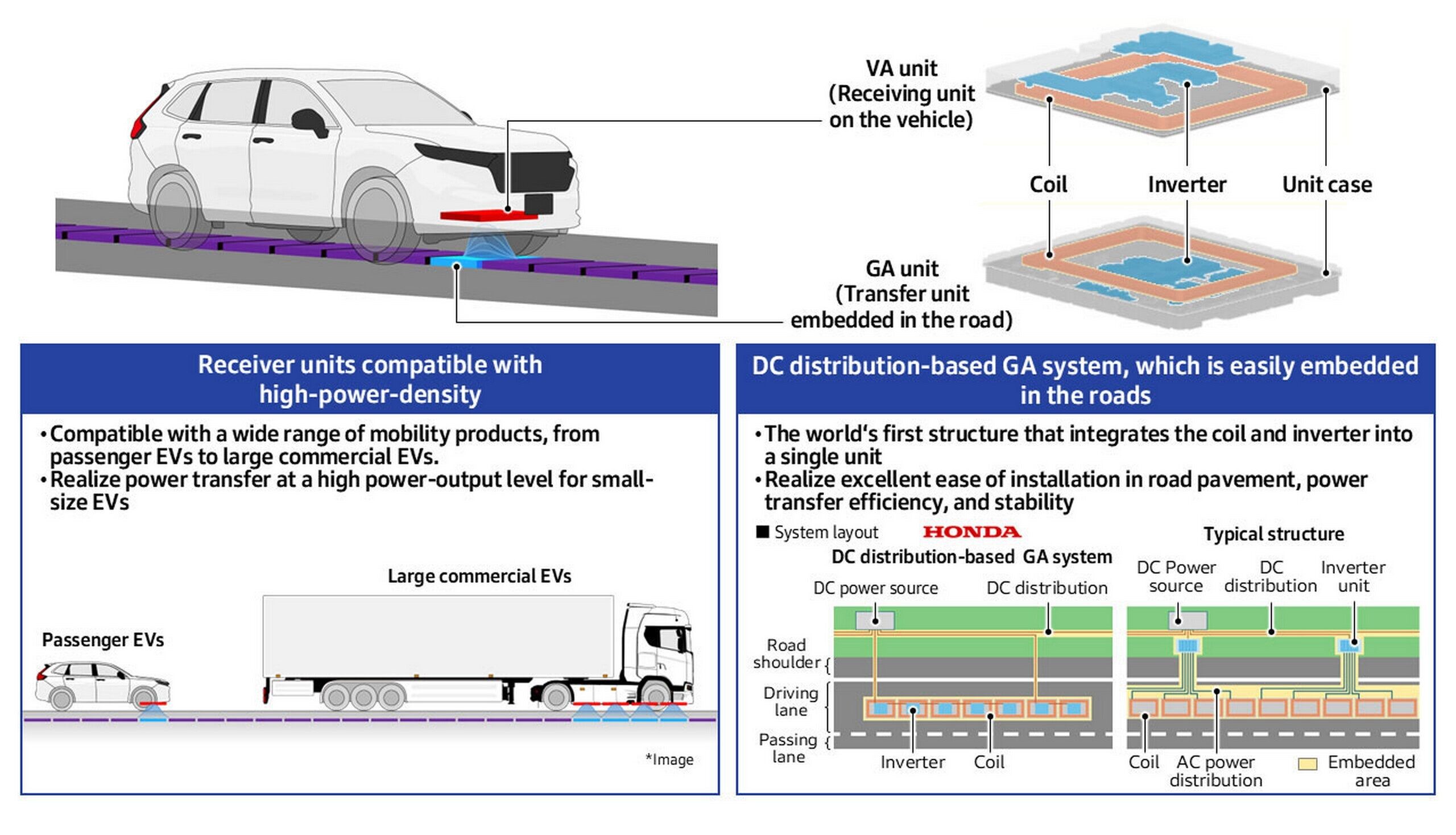
Honda’s system uses a high-power-density receiver/transmitter positioned under a vehicle and charging equipment from Taisei embedded into the road. It recieves power from electrical boxes positioned nearby. Honda has already started practical testing of the technology, but hasn’t provided any details as to how much energy can flow from the road to the car, or how much the battery could be charged.
Unfortunately, it doesn’t appear that wireless charging roads like those being worked on will replace traditional charging any time soon. Honda itself says supplying power to EVs while they are in motion will simply reduce how often owners have to charge their cars at home or at public charging stations.
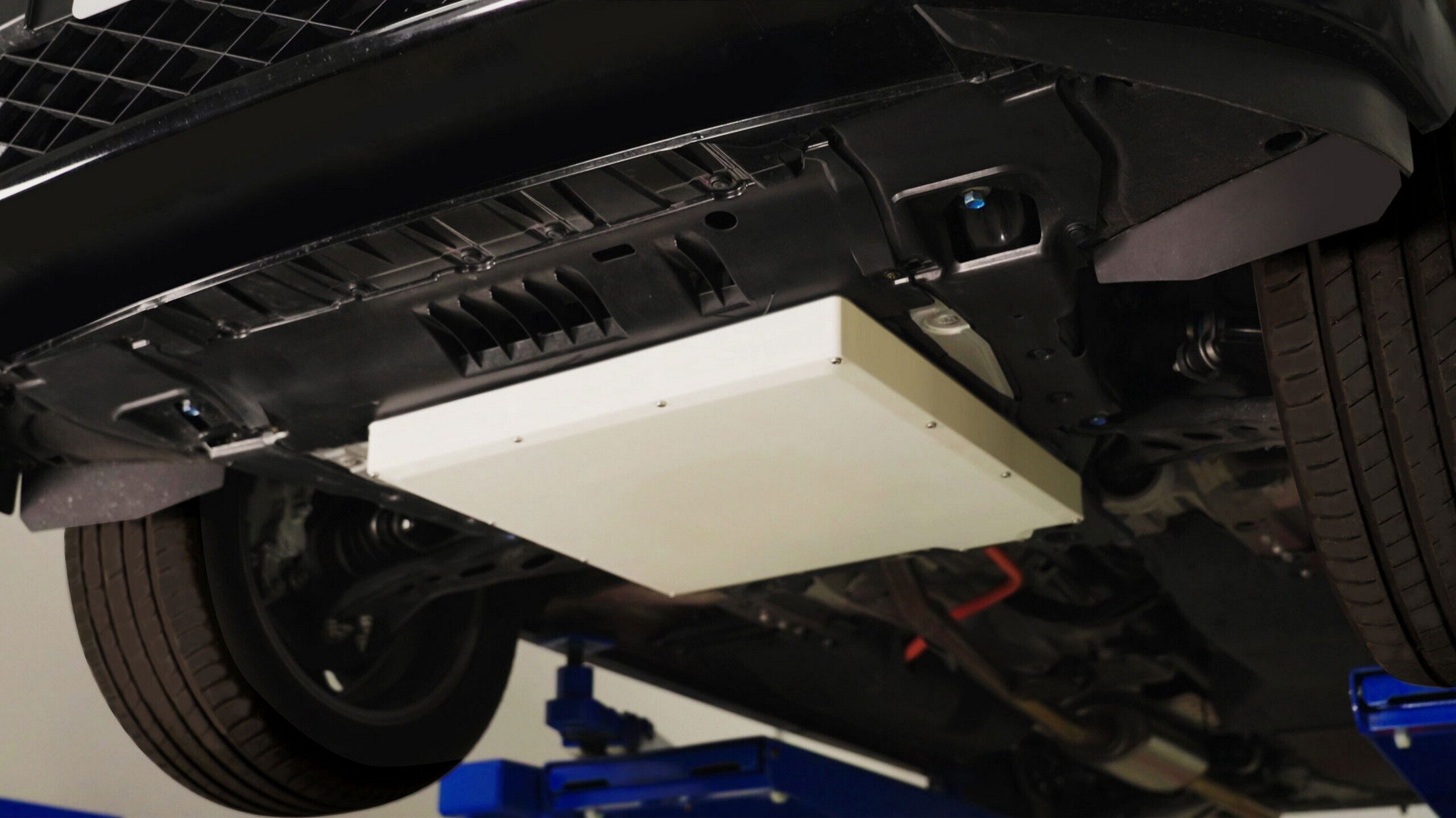
Honda’s initial focus is on commercial vehicles. Later this year, it will start building a new road with Taisei where the strength and durability of the surface will be tested. Large commercial vehicles will then start to use the road, and it’ll be upgraded to deliver power outputs of up to 150 kW.
According to Honda, it is “striving to realize carbon neutrality by 2050 and offer the joy and freedom of mobility to more people around the world.” It believes technology like this will help encourage the widespread adoption of EVs. After testing on private roads concludes, Honda will begin testing on public roads in Japan from 2027 onwards.