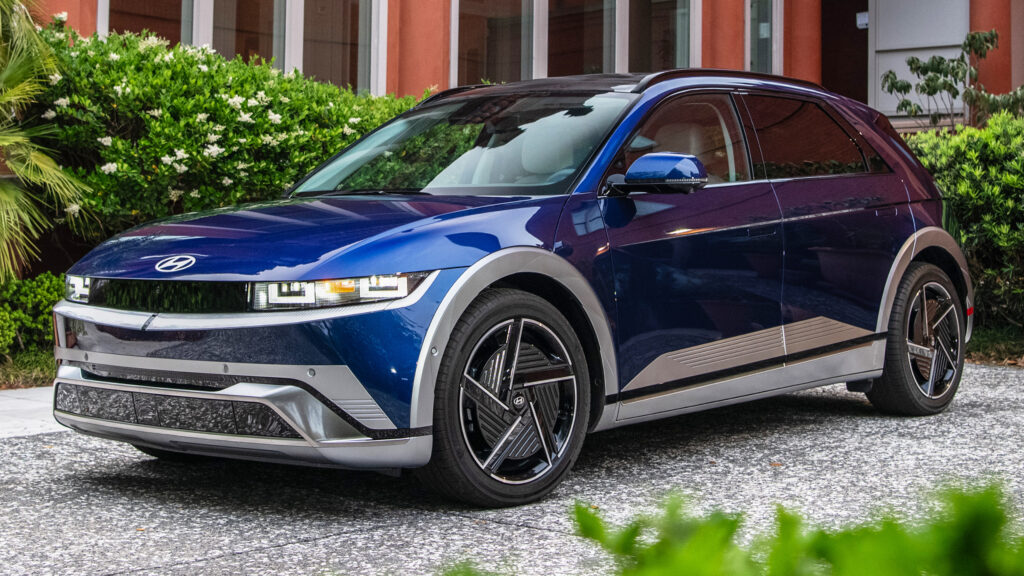
- The new ID Tiguan replaces both the VW ID 4 and ID 5.
- VW’s latest electric SUV uses its familiar MEB+ platform.
- The ID Tiguan will launch in North America, but timing is unconfirmed.
Like many of its competitors, Volkswagen has realized the best way to convince motorists to buy an EV is not to make it look weird or give it an odd name, but instead to create an EV that looks and sounds familiar. This is exactly what it’s done with the new ID Tiguan, built to replace the ID 4 and ID 5, and leaning into a more traditional SUV design that should better appeal to typical VW buyers.
Just like the Cupra Raval, VW ID Polo, and VW ID Cross, the new ID Tiguan uses the company’s latest MEB+ platform. This architecture supports three distinctive versions and two different battery packs. Sitting at the base of the range will be a rear-wheel-drive version using a 58-kWh battery. VW hasn’t provided chemistry details about this pack, nor has it said whether it’s the same usable 58-kWh pack that had been offered in North America’s ID 4. What we do know is this base model is rated at 187 horsepower.
Read: As VW Kills Off The ID 4, It Launches A $12,500 Discount In The U.S.
Positioned in the middle of the range will be a more powerful, 282 hp rear-wheel drive model with a larger 77 kWh battery. Shoppers who want all-wheel drive traction will be able to order the ID Tiguan in a single 4MOTION all-wheel drive configuration, producing a combined 295 hp and also using the 77-kWh pack.
VW says the new ID Tiguan can travel up to 373 miles (600 km) on a single charge under the WLTP cycle. This is presumably for the rear-wheel-drive, 77-kWh model, although that has yet to be confirmed. Prospective buyers of the ID Tiguan will be pleased to know the 58-kWh version can haul up to 3,968 lbs (1,800 kg), while the 77 kWh models are good for 4,409 lbs (2,000 kg).
A Fresh New Design


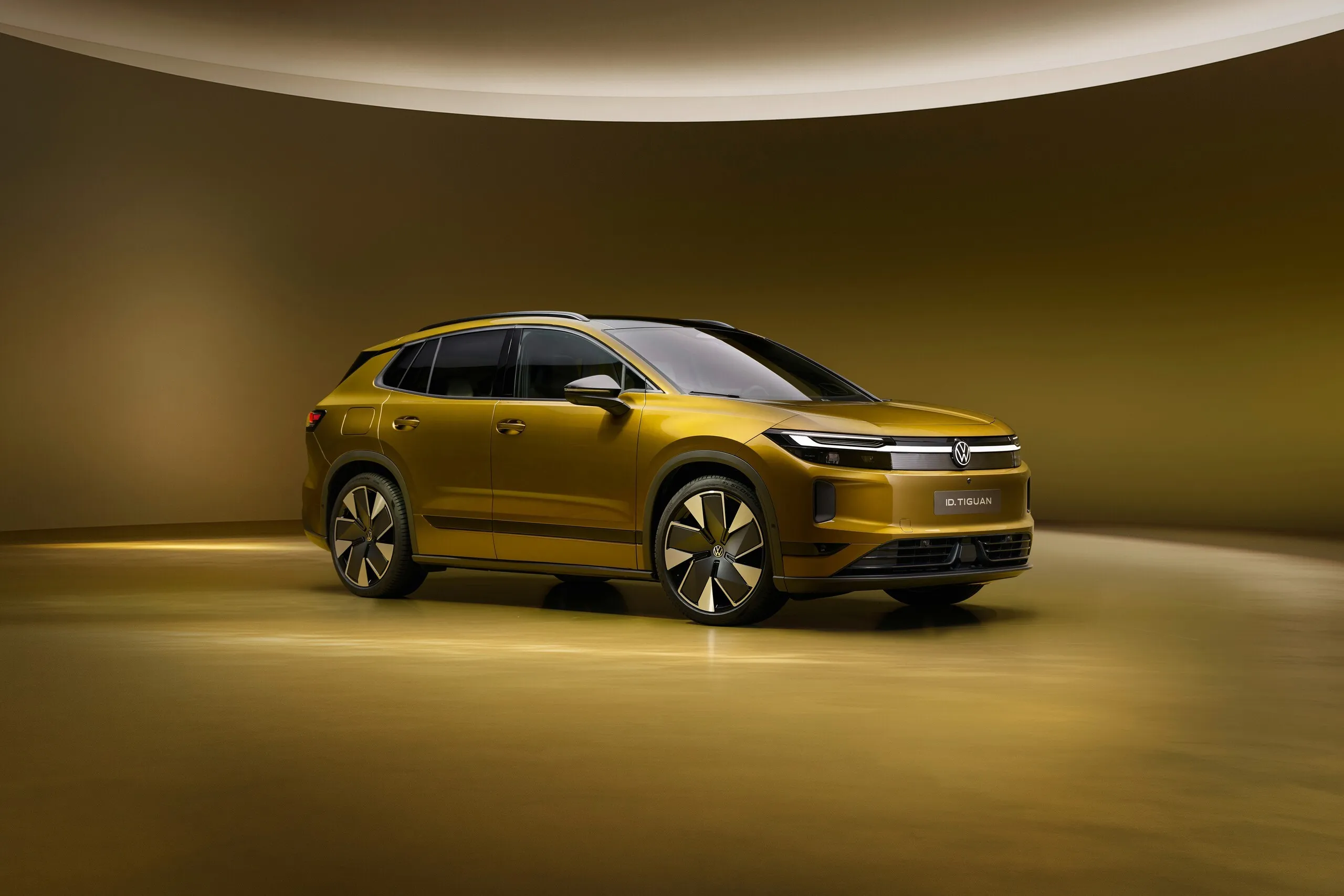
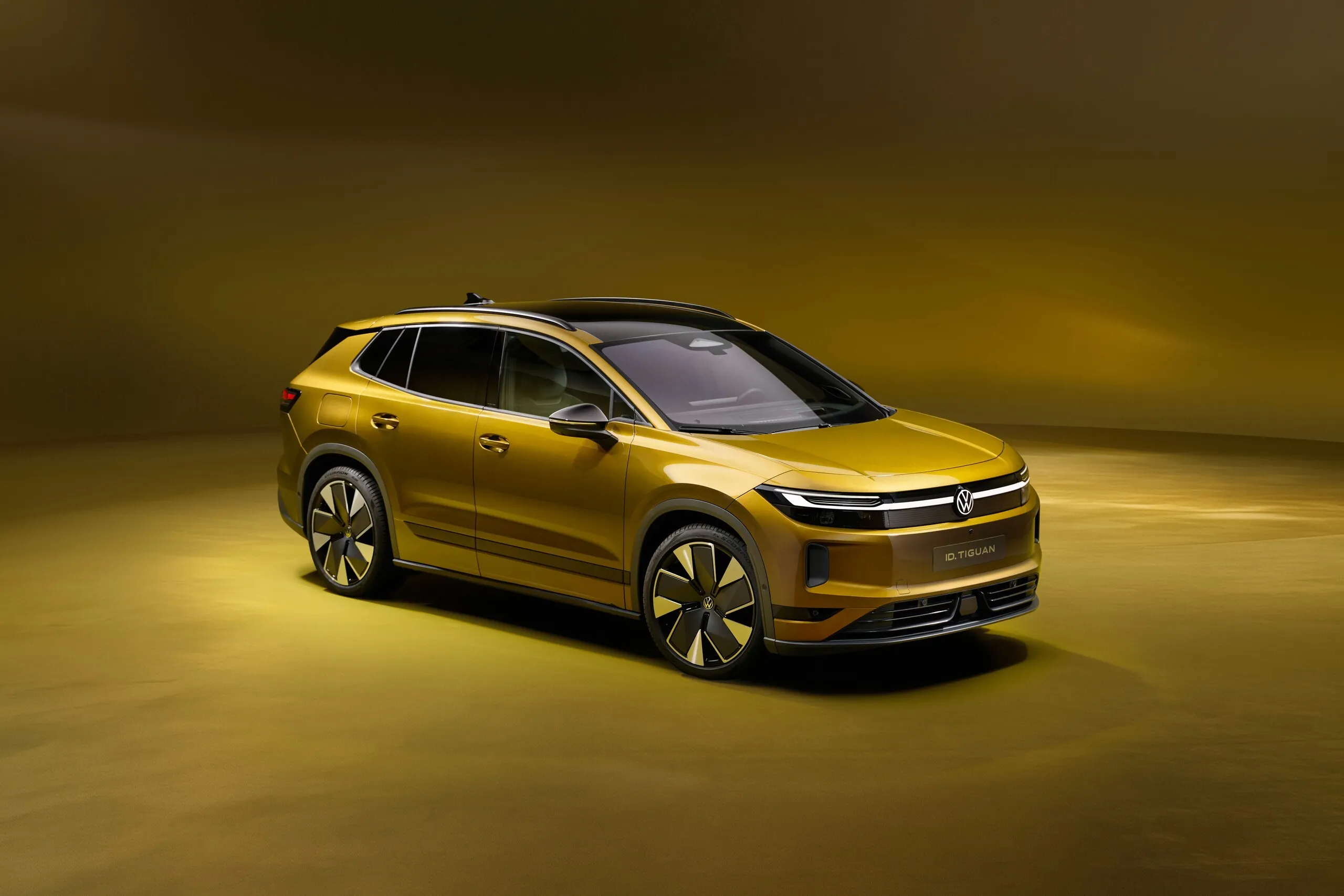
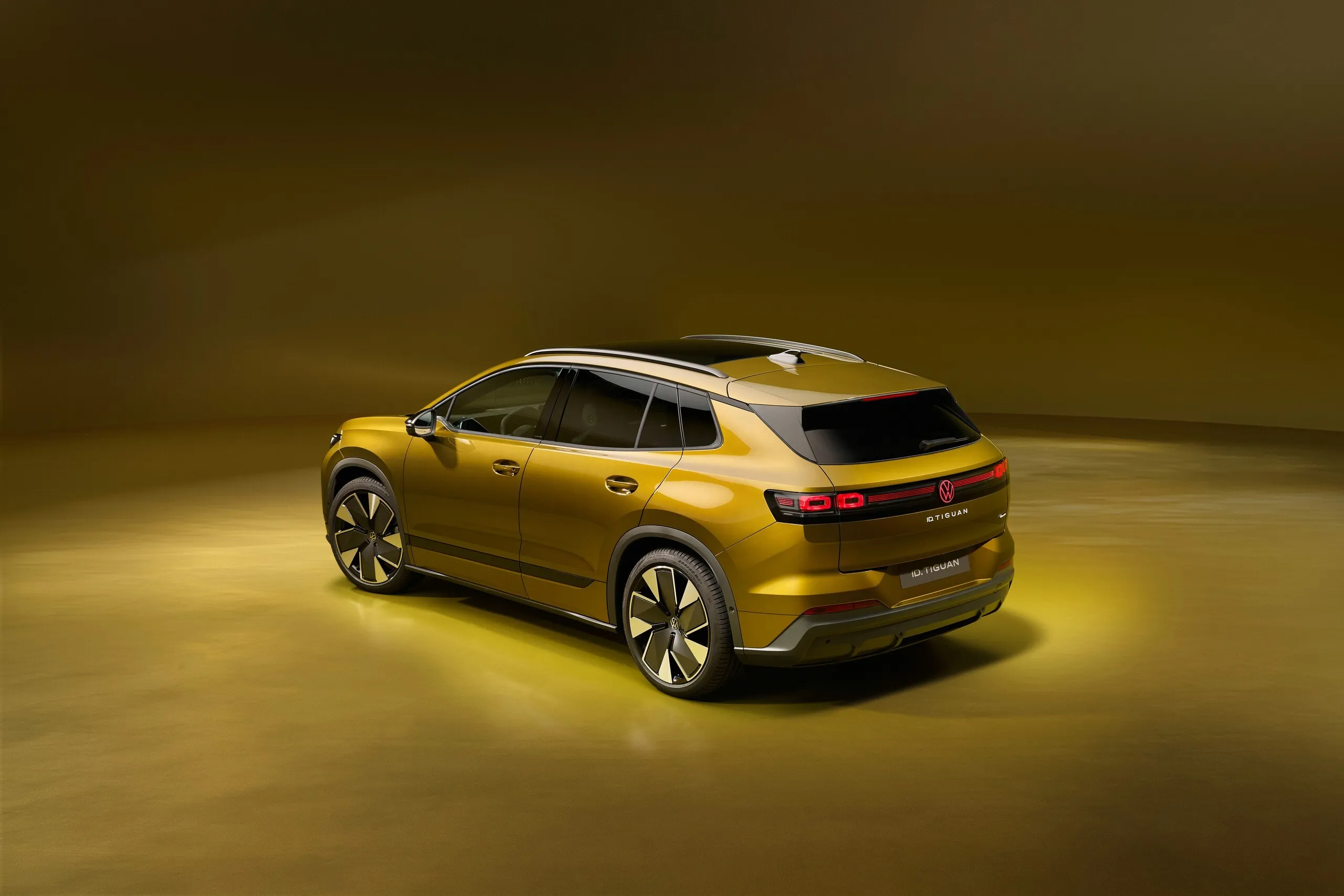
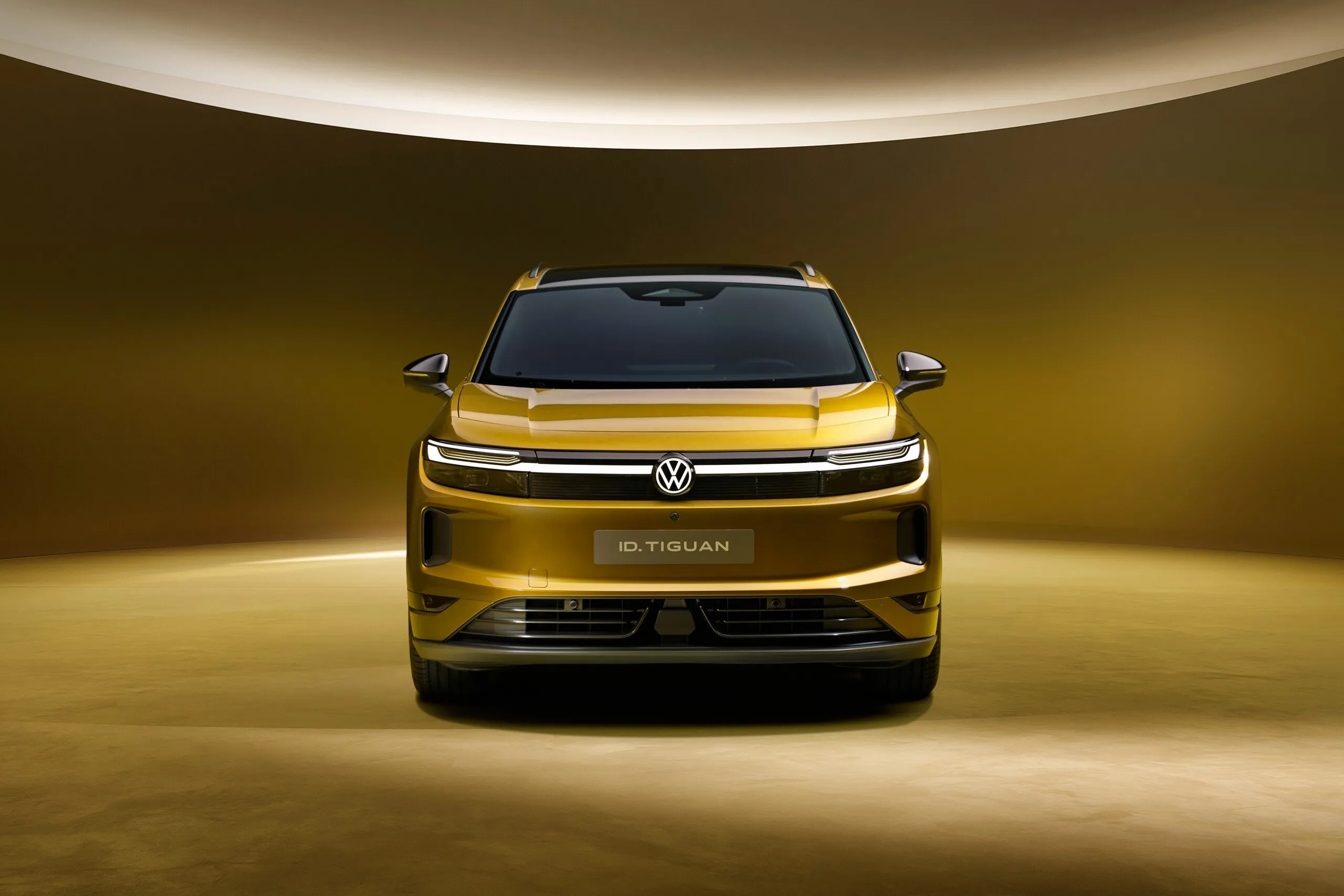
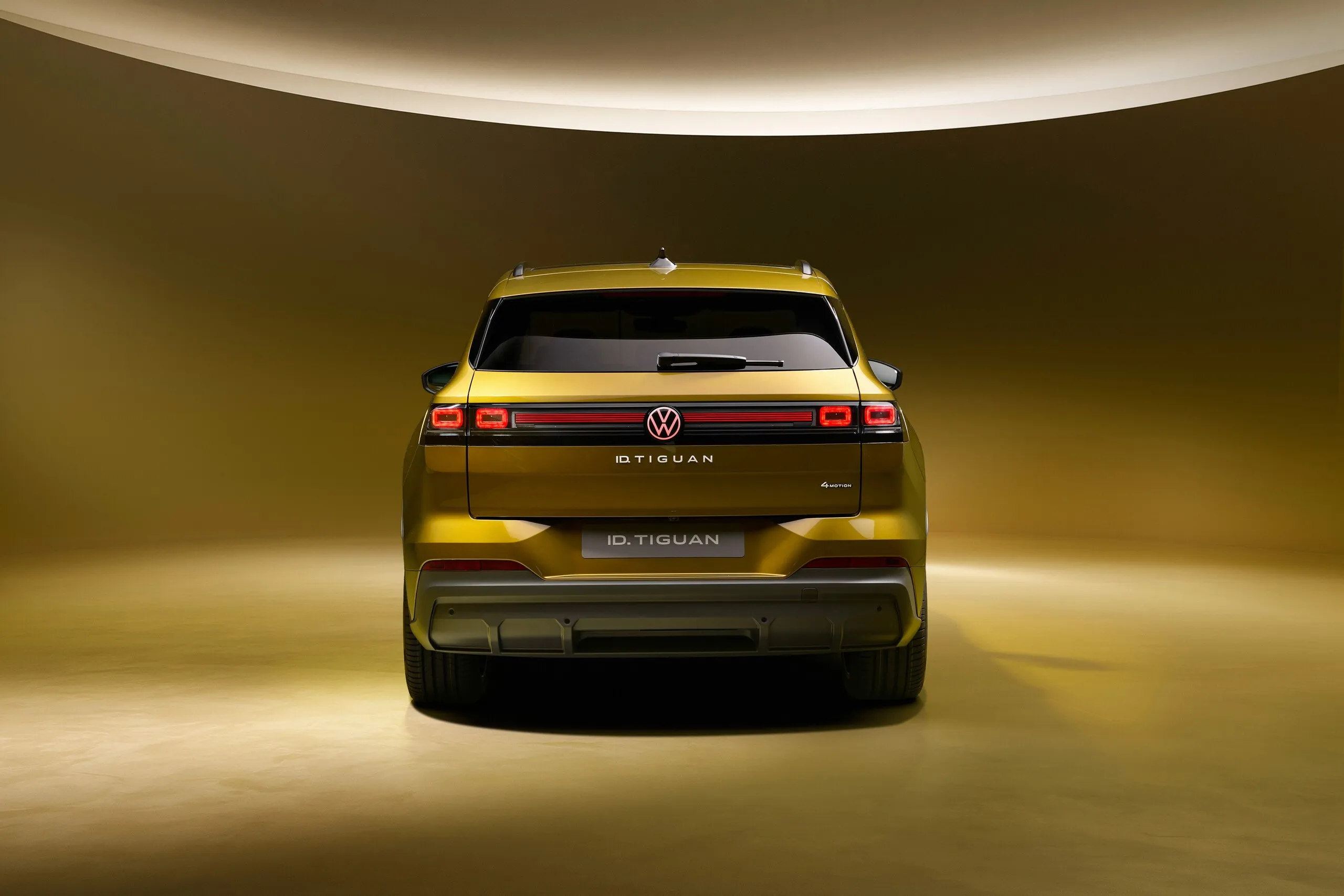

The ID Tiguan’s design immediately distinguishes it from the ID 4 and ID 5. VW says it uses the company’s Pure Positive design language, boosting its presence and making it look more modern. Like the ID Polo and ID Cross, which it shares its platform with, the ID Tiguan also has several design similarities to those models.
The most obvious of these is the intricate LED daytime running lights and light bar stretching the width of the front fascia. Instead of a traditional grille, VW has added a pair of black intakes near the base of the bumper. There’s nothing radical about the EV’s side profile, but the shoulder line running from the corner of the headlight, along the doors, and across the tailgate catches the eye. At the rear are an intriguing set of taillights with bold LED graphics and four narrow illuminated stripes connecting them. Glowing emblems have also been added to the front and rear of the ID Tiguan.
A Cabin With Real Buttons
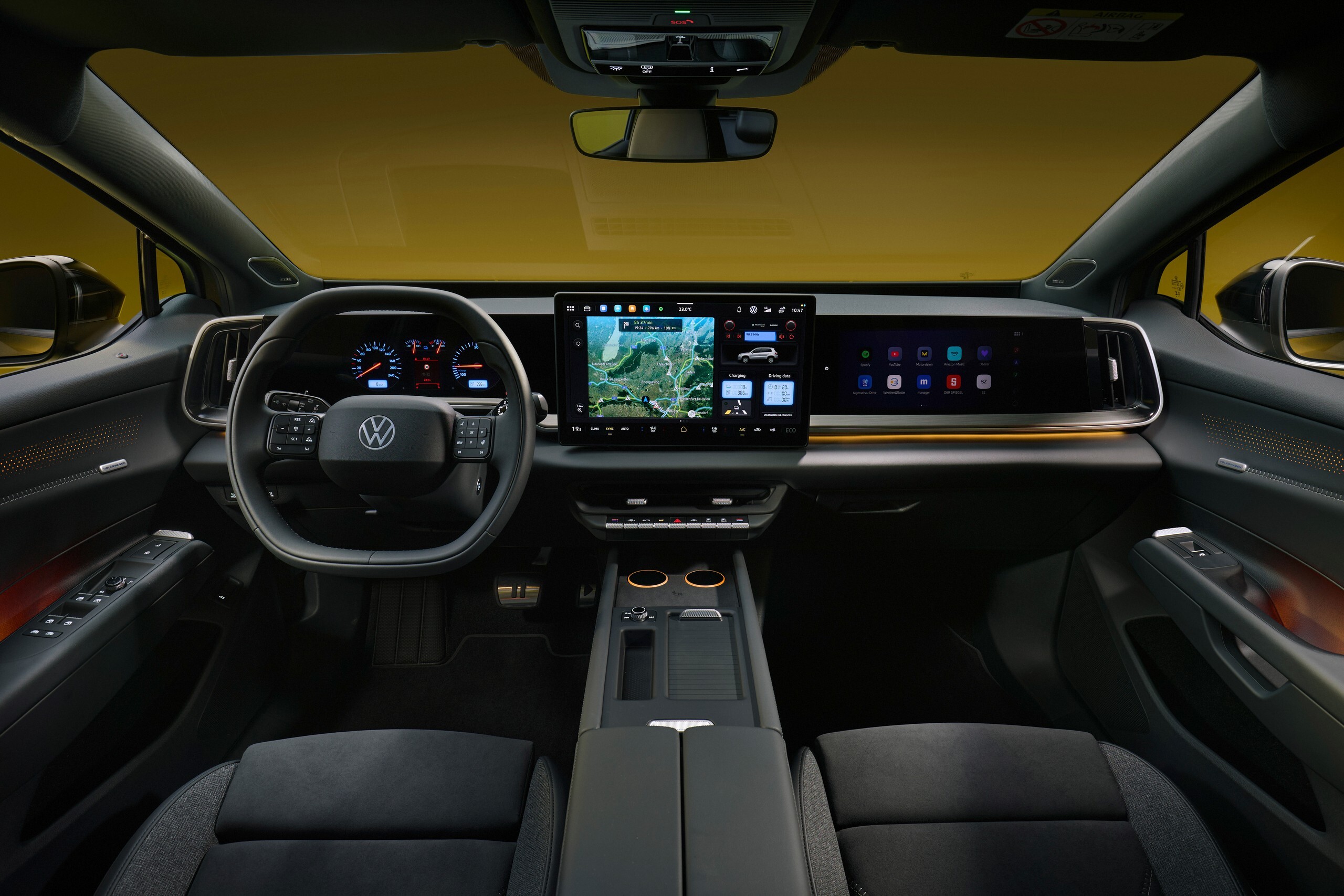
Arguably more important than how the EV looks from the outside is what the interior is like. By comparison, the old ID 4 and ID 5 feel very outdated. It starts with the new steering wheel that uses physical buttons for the cruise control and audio settings, rather than the silly piano black plastic haptic switches of old.
Additionally, the ID Tiguan has a larger digital instrument cluster built into the dashboard, rather than just perched on top of it like this model’s predecessors. This cluster even includes a very cool ‘Retro’ theme which displays four traditional gauges. A larger infotainment system has also been added, although VW hasn’t mentioned how big it is. A passenger display will also be available.
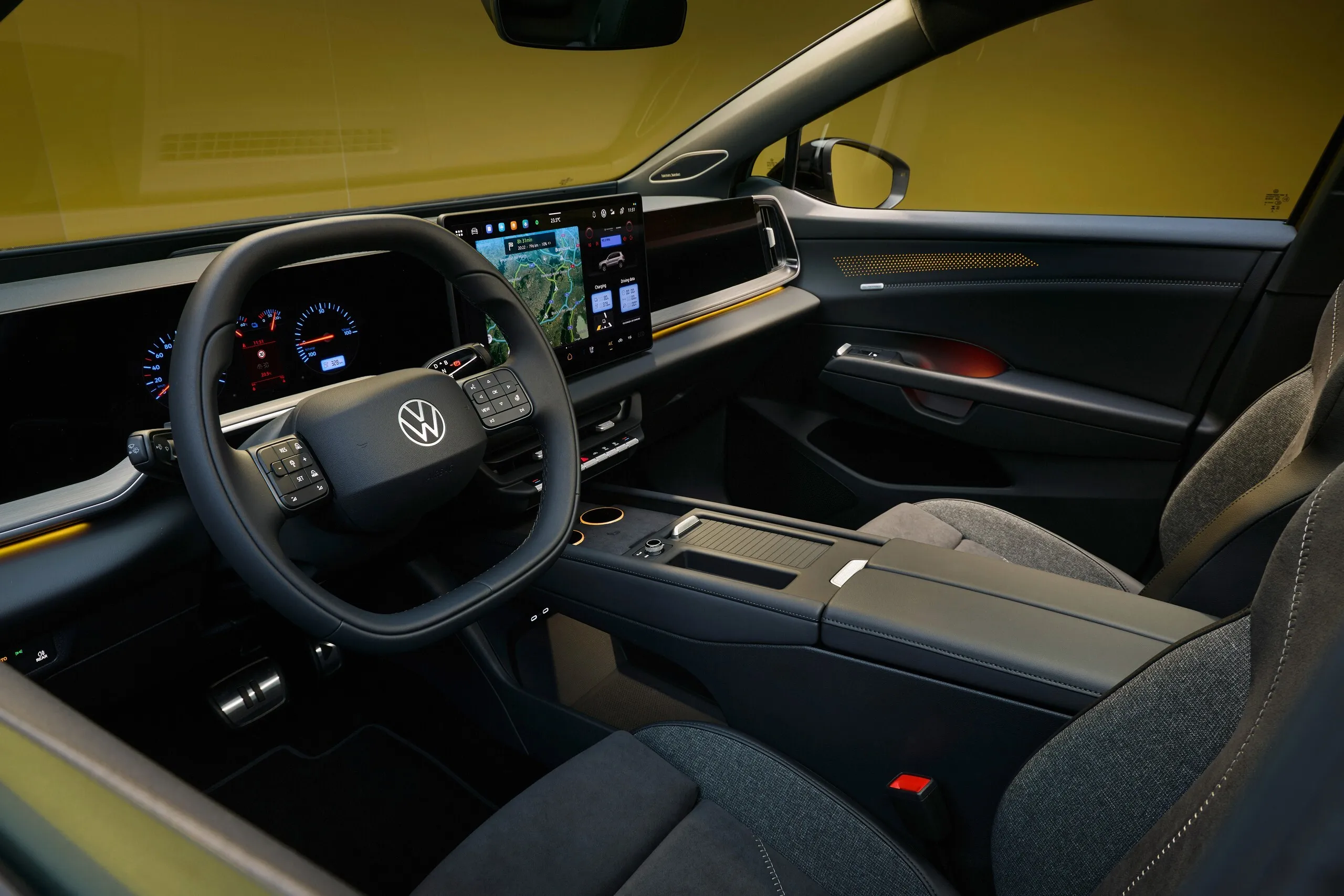

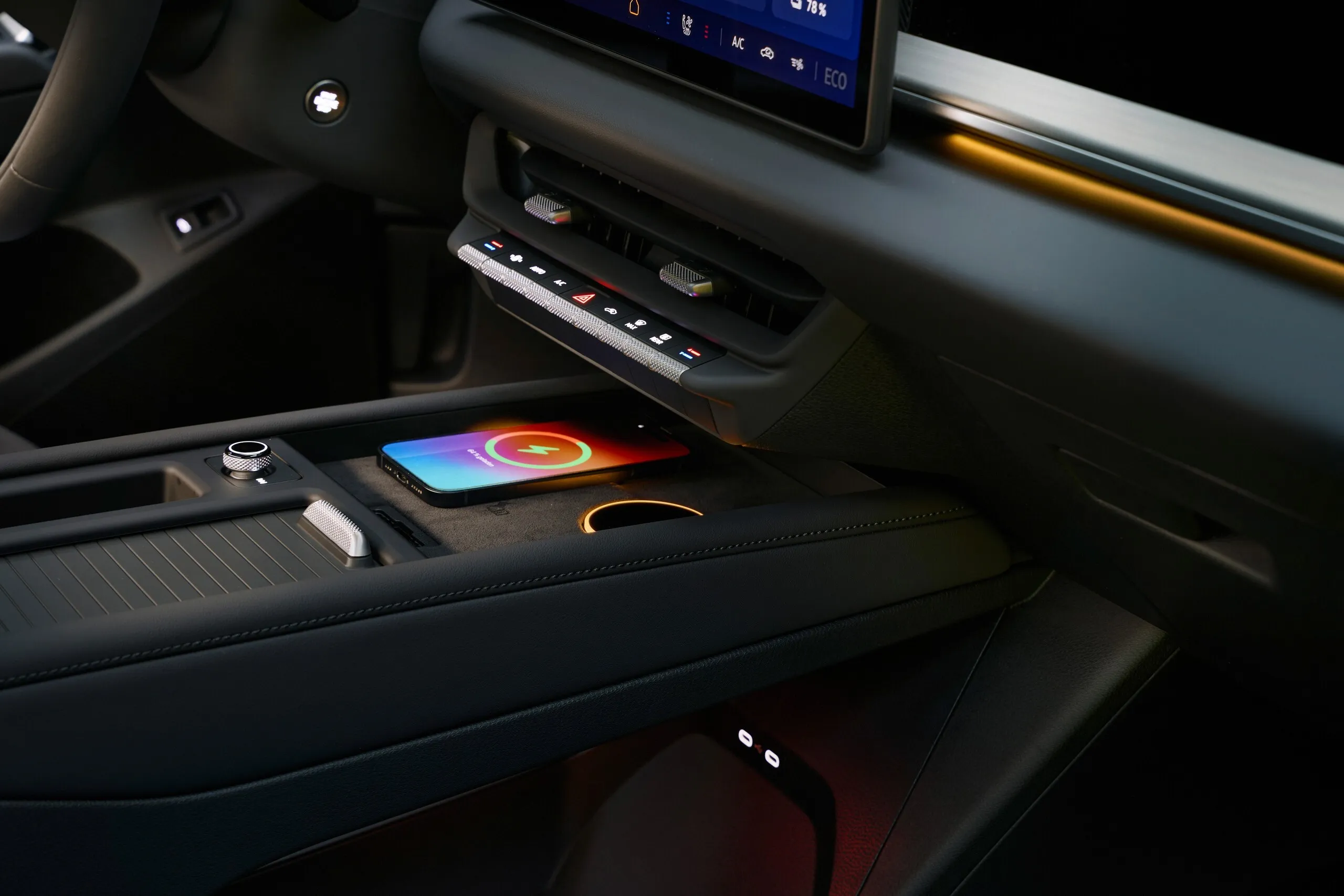


Then there are the buttons. VW was almost burned at the stake for its silly touch-sensitive controls used across its outgoing generation of cars. There are none in sight with the ID Tiguan. Located under the central air vents are nine physical switches to control the HVAC, including the temperature and fan speed, all with a lovely, knurled metal finish. There’s also a small volume knob on the center console and two wireless phone chargers.
The materials throughout also appear slightly nicer, particularly the soft-touch surfaces on the tunnel and door panels, although we’ll reserve final judgment until we actually see it in person. A full range of options has yet to be announced, but VW says the ID Tiguan will be available with optional massaging, heated, and ventilated front seats, a Harman Kardon audio system, and a panoramic sunroof. It also supports a Digital Key, so owners can use their smartphone to lock, unlock, and start the EV.
VW has confirmed the ID Tiguan will launch in North America, but it’s not yet ready to say when it will arrive locally. In the meantime, pre-sales across Europe will start on October 13 with prices kicking off at €42,695 ($47,900). Deliveries will start early next year.