

Michelin Tires Now Have RFID Tags, And Here's What They Track
Advanced technology helps improve tire quality and performance
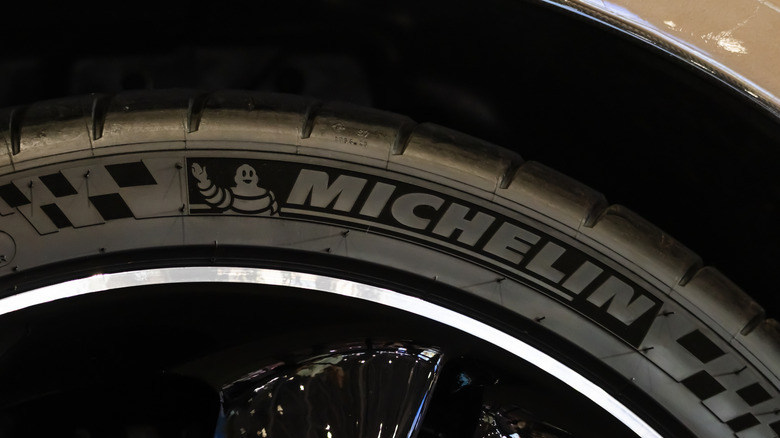
Just about everything these days seems to want to collect your data. We've told you in the past how even tire manufacturers are adding computer chips to their products, like Pirellis with sensors in the tire that helps a car adjust traction in real time if it detects hydroplaning. Now, Michelin, which has been innovating on the EV tire front, is adding a different type of chip to its tires, specifically RFID tags, which stands for Radio Frequency Identification. Importantly, the technology doesn't track drivers. Instead, it helps Michelin track the tire in question.
The tire manufacturer embeds a chip and antenna between protective rubber layers cured into the tire. Its identifier contains a company prefix, a product reference, and a serial number, all of which is permanently locked after programming. That gives individual tires an identity that remains throughout the life cycle. Michelin's tire data service lists information including the brand, product description, and tire size. The tracking aspect refers to scans during manufacturing, inventory handling, delivery, servicing, and recycling that connect that same tire to different stages of its life.
Can the tags track your driving?

The RFID technology Michelin uses is passive and needs no battery. According to NHTSA, passive tire tags obtain power from radio waves emitted by a reader and return the stored information when scanned. This identification system therefore requires reading equipment within range, meaning the RFID tag cannot transmit without that equipment giving it the small amount of power required to return its signal. So, in short, these Michelin tires can't track you. That also separates RFID identification from tire-pressure or temperature monitoring.
Michelin describes tire-mounted sensors as separate hardware that measures those conditions and communicates using the Bluetooth Low Energy protocol. An RFID tag alone doesn't make an ordinary tire capable of reporting on pressure, temperature, or remaining tread depth. The car would need several additional sensors that could encode that data onto the RFID chip. From there, it would require other sensors that could read that data. It would be akin to throwing a middleman into the fray where there's no need for one.
The difficulty of tire tracking
Truly trying to track a person using RFID tags from their car tires would be a serious pain, and a far cry from license plate cameras tracking your car. Sure, the tires have a permanent identifier, so in theory, someone could track down a person via the tires on their car with such a tag. But consider the steps required to do so. First, they'd need access to technology that can scan the tire and record the ID. Next, you would need access to Michelin's database, or a similar one, with a record of every time that tire was scanned in the past. And ultimately, all they would really have is a patchy network of scans over time.
NHTSA's electronic tire-identification study also found that scanning a tag wouldn't directly reveal an owner's personal information. For the driver, the distinction is straightforward. The tag identifies the rubber. Learning more about the car or its owner takes additional equipment and records that very few have access to. Even with that access, it would be a tough task to find someone's personal information with nothing but the tire's RFID data.