

GM Plans To Test Unmanned Silverado 3500s For The Army Next Year
GM Defense is amping up its plans to support the military
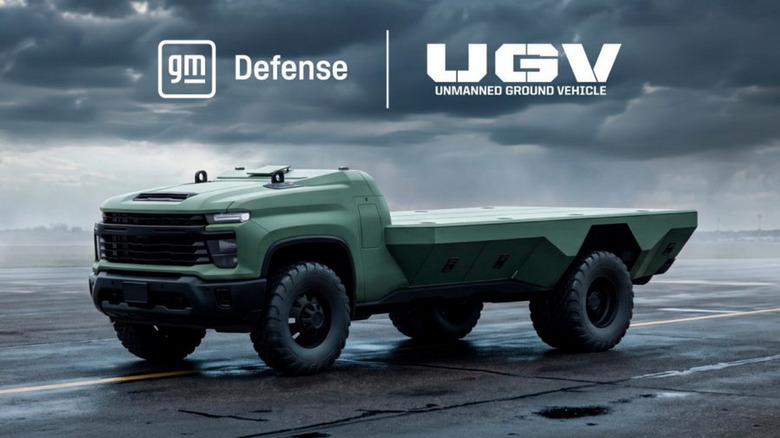
The Chevrolet Silverado 3500HD already has plenty it can do. It tows, it hauls, and it looks so big and muscular that plenty of folks buy it to cosplay as blue-collar workers. Now, GM Defense thinks it can haul supplies through dangerous environments without a driver or even a cabin. The company just unveiled a new unmanned concept truck with functional trials targeted for next year. According to the brand, it can carry supplies, evacuate troops, or even take aim at drones.
Dubbed the Unmanned Ground Vehicle, or UGV, the truck concept showed up at the Association of the United States Army's annual meeting in Washington, D.C. According to GM Defense, it uses a Silverado 3500HD dual-rear-wheel skateboard architecture and supports quiet logistics operations and casualty evacuation. That might make it sound like an electric vehicle, but the drivetrain is more complex than that. Let's break it all down.
The deeper nuts and bolts
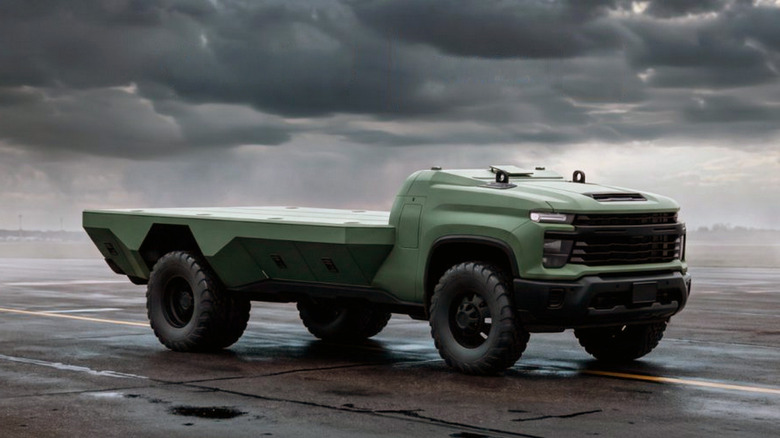
The concept clearly looks a bit strange without a cab, but consider that a weight savings. According to DefenseDaily, the truck can manage 8,000 pounds of payload and offers 102 kWh of onboard energy. A cab would've only reduced what it could carry, and that extra weight would've reduced overall range as well. That said, General Motors told CarScoops that the truck uses a combustion engine but supplements that powertrain.
Specifically, it told us that "it's an ICE engine with PTO charging the RESS – used for export power." In simpler language, the internal combustion engine is connected to a power take-off unit. That PTO can charge the onboard battery, which, in turn, can power other equipment. Given the need for very quiet operation in military theatre, it's a very elegant solution. That is, provided that you can get a massive truck into position without alerting anyone to its presence.
A familiar platform
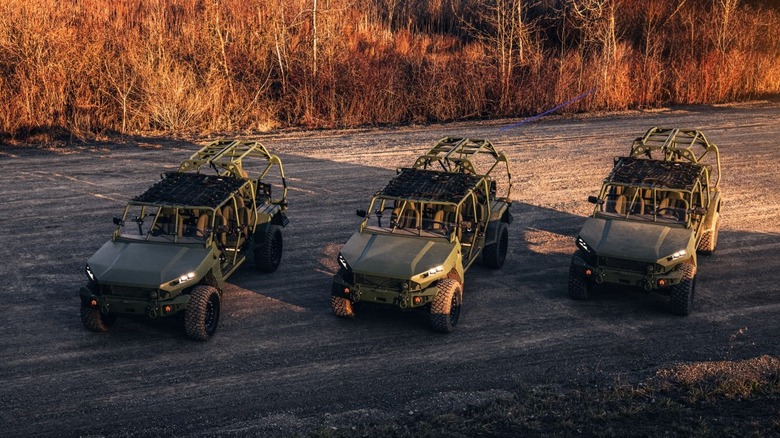
General Motors already builds vehicles specifically for the military. In this case, that means that it doesn't have to develop brand-new components for every aspect of the UGV. In fact, because it's already building for both the military and public consumption, it hopes to bring its full supply chain into the project. "We do not begin with a blank sheet of paper," GM Defense president Steve DuMont said. That's a big deal because the Army evidently changed its requirement from 649 to some 12,000.
During what GM described as close collaboration with "the customer," it developed what it calls the Infantry Squad Vehicle Utility Prototype. Then it delivered seven and engineered a "versatile five-soldier variant" that it expects to go to about 39 active-duty brigades. In short, GM is moving quickly to supply the military with vehicles that meet very specific, sometimes rapidly changing needs. It hopes to test the UGV next year. Whether it'll bring the hardware to knock drones out of the sky is debatable.