

Forget DoorDash, GM Wants Your Next Car To Run Errands For You
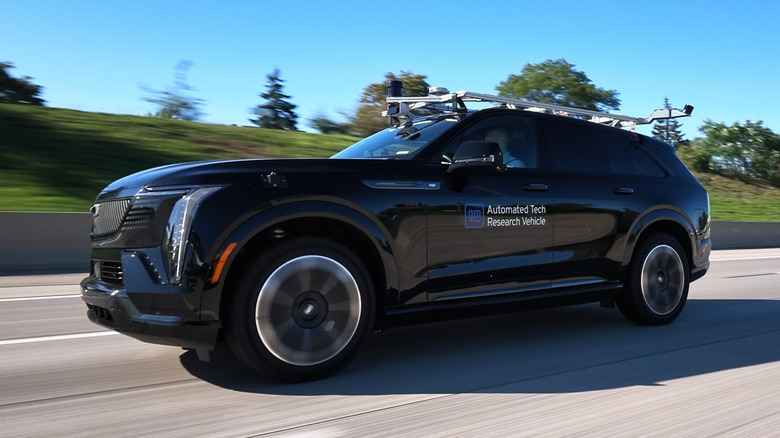
Driving is huge fun, but, let's be honest, it can also be a real drag. For every minute you spend on an absorbing country road, there must be 10 you endure while sitting in gridlocked traffic, or running errands, like grabbing that carton of milk you forgot to buy earlier from the grocery store. Now GM says it wants to give you more time to do the country road stuff by sending your car off alone to do the boring bits.
We already got a taste of GM's autonomous plans last year, when the automaker revealed it would ship the 2028 Cadillac Escalade IQ electric SUV with "hands-off, eyes-off" Level 3 driver assistance. But that same technology will soon be available on other GM models, including the next Chevy Silverado. "Following its 2028 debut on the Cadillac ESCALADE IQ, we'll quickly roll out this platform across our highest-volume gas-powered full-size SUVs and trucks, our three-row crossovers and our fourth-generation electric vehicles," GM announced.
Vehicles fitted with GM's existing Super Cruise system have already logged over 1.2 billion hands-free miles since the technology was launched in 2017. But like Ford's BlueCruise and Tesla's Full Self Driving (FSD), Super Cruise is what the Society of Automotive Engineers (SAE) calls a Level 2 system, meaning it still requires drivers to keep their eyes on the road, and uses cameras targeted at their face to make sure they're doing it.
GM's next-generation tech is Level 3, which delivers true autonomy, albeit only on certain roads. You can legally scroll Instagram, work on your laptop, and watch movies while the car takes the strain, but you can't yet jump in your car outside your house, tell it to drive to Timbuktu, and expect it to get there.
Central super computer
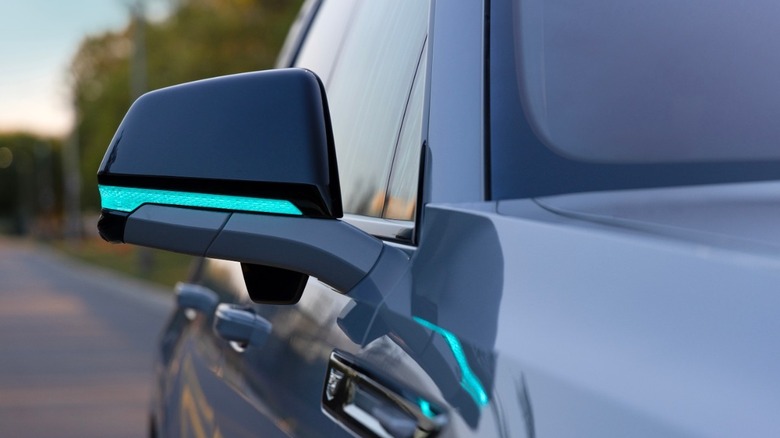
A turquoise light strip running across the dashboard will illuminate to let Escalade IQ drivers know that it's safe to kick back. There's also the possibility of lights on the door mirror housings giving other drivers a warning that the vehicle is in autonomous mode, though current legislation doesn't allow that in some states.
The L3 system, which has yet to named, is designed to reduce driver stress, but you can bet it's caused GM engineers — as well as its lawyers — some sleepless nights. GM's Level 2 system uses a mixture of cameras and radar sensors, but reaching Level 3 autonomy requires more advanced, and more expensive, Lidar. Only Mercedes and BMW have offered Level 3 assistance in the US, and both automakers have since reverted to hands-off, eyes-on systems due to high cost and weak demand.
But Lidar is only a small part of the autonomous puzzle. The real driver behind this self-driver is a new centralized computing system. Instead of multiple control units controlling multiple features, GM's next vehicles and their various systems will be run by one liquid-cooled central compute unit (CCU) that's around 40 times more powerful than anything in today's cars and trucks.
It handles the hard decisions needed to run everything from autonomy, safety, and propulsion, and GM says it still has capacity to grow to "support the AI and autonomy experiences we're building toward." Think full door-to-door autonomous driving a few years down the road.
GM already has tons of real-world Super Cruise data to crunch, but engineers are running virtual tests on a massive scale to ready the new technology. Its computing stack covers 3 billion virtual miles every day, a feat that would require 2.5 million vehicles driving 1,200 miles per day 24/7 to replicate.