

GM Going All-In On AI To Power OnStar And Fast-Track Next-Gen Vehicles
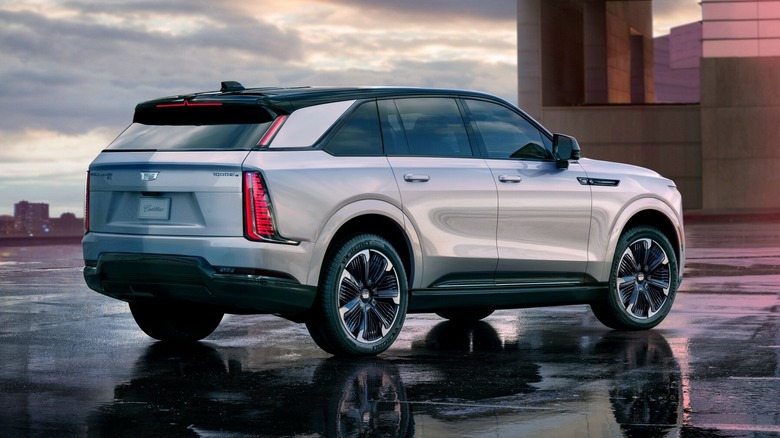
Artificial intelligence is much more than a buzzword in the automotive industry and is fundamentally changing how companies design, develop, and build cars. General Motors is the latest to dive headfirst into the AI future, promising to speed up new model launches because of it. AI will also make interacting with a GM product very different.
In a bid to ensure they can keep up with new players from China, legacy manufacturers understand the importance of bringing new products to production quickly. It's typically taken GM products of the past four to five years to move from concept to production. By leaning on AI, virtualization, and combining its design, engineering, and manufacturing into a single "unified digital thread," the carmaker wants to slash that to about two years.
This new approach is already bearing fruit with GM's long-promised lithium manganese rich batteries. It took the company just one month from creating its first LMR battery pack concept to receiving formal approval for the project. This was thanks to the use of AI that let it test more than 300,000 battery designs in the virtual world before it assembled an actual prototype.
AI is coming to OnStar
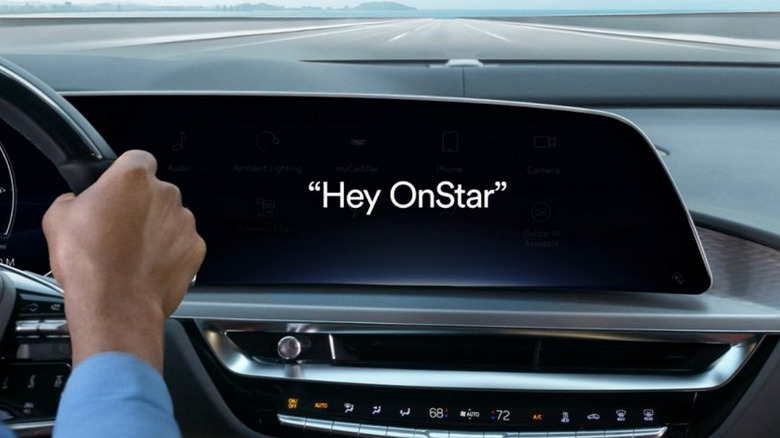
It's not just vehicle development that AI is changing. GM is also using the technology in its new OnStar AI Assistant, which will launch with the 2027 Cadillac Lyriq in the coming months through an over-the-air software update. Whereas in-car voice assistants have historically been slow, easily confused, and often useless, artificial intelligence promises to make OnStar more interactive and conversational.
After triggering the system by saying 'Hey OnStar,' owners can then say something like 'It's getting warm in here,' and the car will automatically adjust the temperature. The new voice system can also be used to turn on dome lights, adjust the temperature, open the glove box and charge port, as well as provide real-time information about tire pressure and charging status. Perhaps the most interesting element of the system is its ability to explain how certain vehicle functions work. If you're unfamiliar with how an EV's one-pedal driving mode works, you can ask OnStar, and it'll tell you. Whether or not it'll help you craft a witty text message to your crush remains to be seen.
GM says the assistant has been built with "authoritative" vehicle knowledge, providing far deeper insights than traditional assistants. The system won't be able to answer every question, so if it needs a little help, it'll connect the driver with a real OnStar Advisor.
A new OnStar app is also coming soon, replacing the individual mobile apps already offered by Buick, Cadillac, Chevrolet, and GMC. It aims to better connect drivers with their vehicles and can be used to view video captured by a car's cameras and assist with navigation. After launching on the Lyriq through an over-the-air software update, the new OnStar AI Assistant will be introduced across other GM products.
A new platform for next-gen EVs
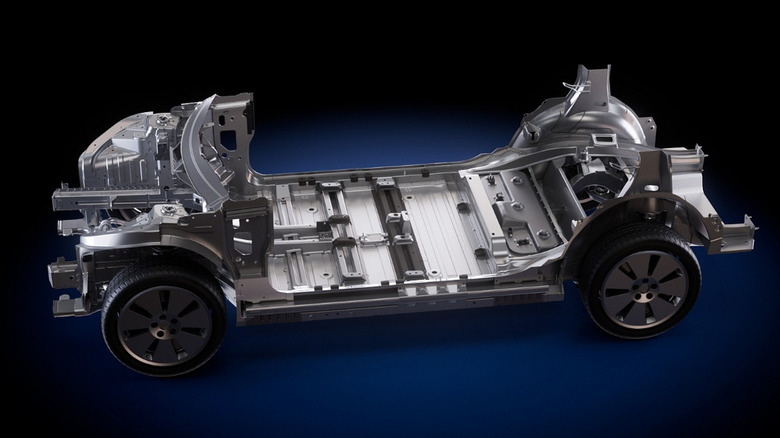
The big announcements from the GM Forward event don't stop there. The automaker has confirmed several key details about its Generation 4 electric vehicle platform, which it says is crucial to bringing electric mobility to mainstream buyers "at scale." A key part of the platform is the aforementioned LMR batteries.
Compared with the batteries in most current EVs, LMR cells use less cobalt and nickel and much more manganese. They promise higher energy density than LFP cells at a similar cost and will be produced at GM's plant in Spring Hill, Tennessee, in partnership with LG Energy. GM has also developed smaller and simpler electric motors using 40% fewer parts.
GM has previously said using LMR batteries could slash the cost of a vehicle like the Chevrolet Silverado EV by a considerable $6,000. The LMR technology would also be able to match the 400-mile range which that pickup's NMC battery currently provides. Up until semi-recently, GM had been planning to assemble these new batteries alongside more conventional LFP cells for other EVs at its Tennessee plant. However, it's since tweaked these plans and will instead only manufacturing LFP cells for data storage. The forthcoming arrival of LMR batteries doesn't mean the death of GM's NMC offerings either, as they are simply expected to be restricted to higher-end models, whereas the LMR cells are destined for a broader array of models, including affordable ones.
GM's new cars will also be smarter
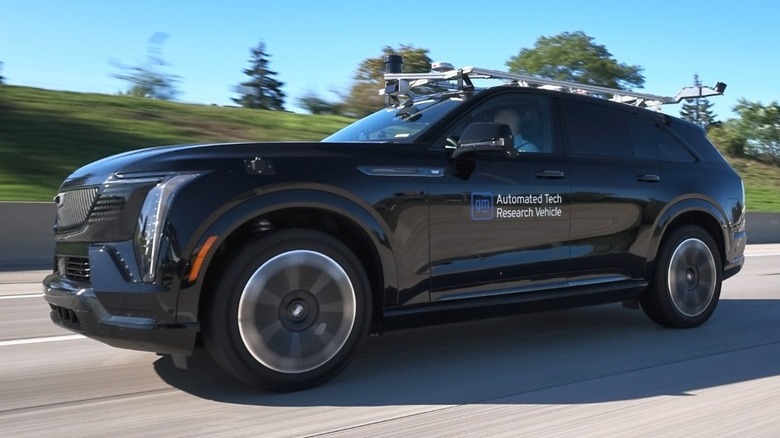
Not only is the physical architecture of GM's Gen 4 system different, but it incorporates a new Central Compute Unit (CCU) that handles everything from chassis controls through to active safety, perception, and propulsion. GM has made some bold claims about the setup, saying it has 40 times more computer power than its previous systems, all while requiring 30% less wiring. A new Cadillac Escalade IQ, set to launch in 2028, will be the first product to use this new 'brain.' The platform will then be used across GM's popular full-size gas-powered SUVs and pickups, its three-row crossovers, and its fourth-generation EVs.
GM is also promising more advanced autonomous driving functions. Starting in 2028, the Escalade IQ will launch with autonomous highway driving, with testing already underway on closed courses. If you're not yet ready to commit to buying an EV, don't fret. GM has confirmed that its gas-powered vehicles will also support all of its most advanced driver assistance systems, so even a full-size pickup will offer autonomous highway driving. To speed up the development of these systems, GM is completing approximately 3 billion miles of driving in the virtual world every day, in addition to completing over 1 million miles of real-world testing a month.