

Fiat Dresses Up Its Oldest Car As An Autobianchi For A Good Reason
The Tributo Autobianchi is the nicest Pandina money can buy, but nostalgia is not the only reason behind its existence.
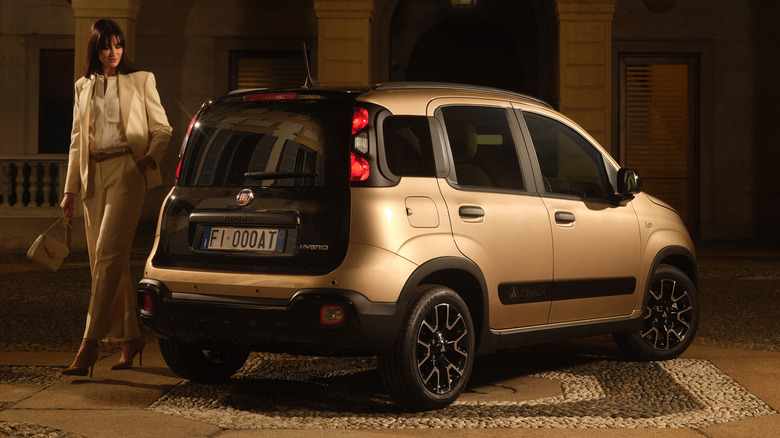
Fiat has introduced a new flagship trim for the aging Pandina, celebrating 30 years since the final Autobianchi rolled off the production line before the Italian brand went down in history. However, besides nostalgia, there is a much more calculated, legal reason behind Stellantis' decision to dust off a dead nameplate.
According to a newly introduced legislation, the Italian government can seize control of classic automotive trademarks that have sat dormant for at least five consecutive years. Italy's Industry Ministry had reportedly registered independent versions of the Autobianchi and Innocenti badges, allegedly planning to hand them over to expanding Chinese automakers willing to build factories on Italian soil.
By slapping the Autobianchi name on a special edition of the production Pandina, Stellantis effectively resets the five-year statutory clock, keeping the historic brand under control. At the same time, it manages to renew customer interest in its ICE-powered city car, hitting the strings of nostalgia.
Platino color, a black tailgate, and Autobianchi emblems
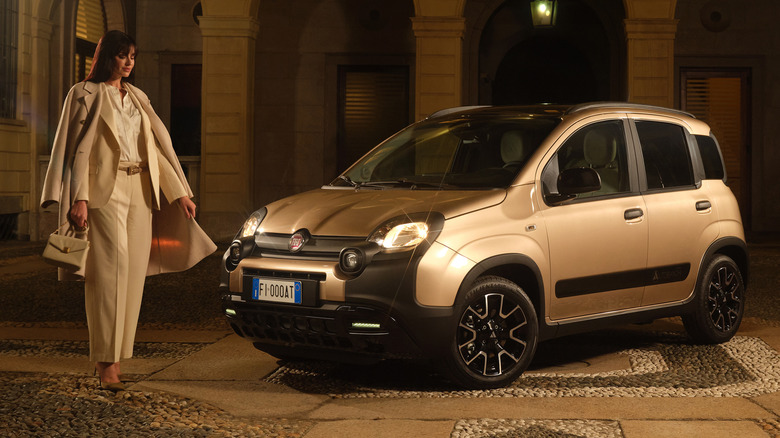
The Fiat Pandina is essentially a renamed version of the third-generation Panda, originally introduced in 2011. Despite being largely unchanged since its debut, the model is the best-selling city car in Europe with 100,000 registrations in the first nine months of 2026. Out of those, 86,000 units were registered in Italy, where the Pandina retains the title of the best-selling car overall.
The Tributo Autobianchi edition is the new flagship of the lineup, paying homage to a premium city car from the '80s. The connection actually makes sense historically, as the 1985 Autobianchi Y10 was based on the architecture of the original Fiat Panda, wrapping it in a more sophisticated package and using higher quality materials for the interior. The Y10 which was discontinued in 1996, was also sold under the Lancia name, paving the way for the Ypsilon.
The Tributo Autobianchi is based on the Cross trim of the Fiat Pandina, inheriting the plastic cladding around the bodywork, the high-mounted fog lights and the roof rails. However, it stands out thanks to an exclusive Platino exterior shade, the black skid plates, and the special badging on the profile. It also rides on a new set of 15-inch diamond-cut alloy wheels with the Autobianchi emblem on the hubcaps. Another cool touch is the optional bi-tone treatment, adding a black finish for the roof, mirror caps and tailgate, with the latter being a signature feature of the Y10.
More premium interior, carry-over engine
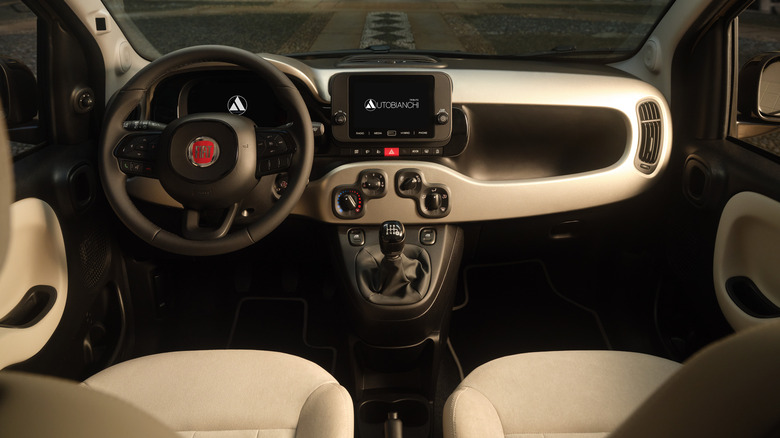
Stellantis honors the spirit of the last Autobianchi by adding premium materials to the playful cabin of the Pandina. The seats are upholstered in a Light-sand microfiber with a "quadrettoni" pattern and have Autobianchi logos on the headrests. The same treatment has been applied on the door cards, in combination with a soft-touch steering wheel, a Platino finish for the dashboard, and glossy black accents. Finally, the instrument cluster and the infotainment display gain custom welcome graphics.
Under the skin, the Tributo Autobianchi is just a regular Pandina with the familiar mild-hybrid 1.0-liter three-cylinder engine producing 69 hp (51 kW / 70 PS), mated to a six-speed manual gearbox. Despite the resemblance to the Panda 4x4, the Pandina Cross donor car is actually a FWD-only affair.
The Fiat Pandina Tributo Autobianchi is available to order in Italy, with production taking place at the Pomigliano d'Arco factory. According to the official website, the model is initially priced from a discounted €15,400 ($17,300) although the offer expires at the end of the month.
 Stellantis