

Future Volvos Will Have Door To Door Autonomy Thanks To Nvidia
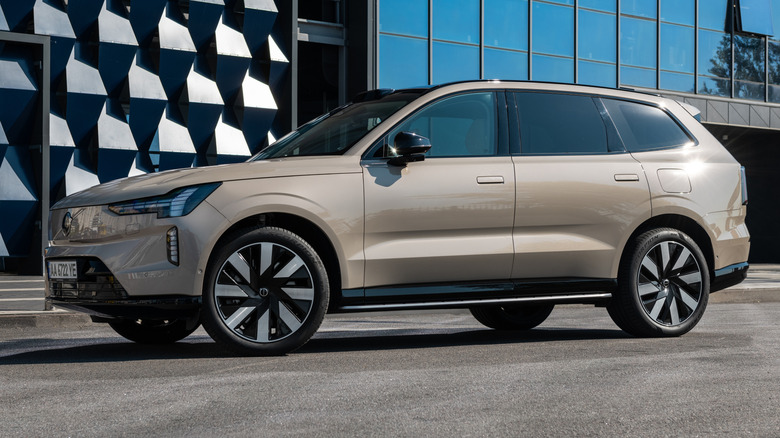
Volvo has strengthened its partnership with leading chipmaker Nvidia, and, in doing so, it has revealed that future models will be able to drive autonomously from door to door, along highways, and through bustling urban areas. The two companies have worked together since 2017, and going forward, Volvo will incorporate Nvidia's Alpamayo software stack, Halos operating system, and Hyperion sensor and compute architecture. In layman's terms, Volvo says this technology will allow it to deliver a system that makes "driving feel easier and more effortless for customers."
To do this, Volvo will first introduce a system that allows for eyes-off autonomous driving. These systems are classified as Level 3 and are being developed by other companies, including Ford and General Motors. Mercedes-Benz and BMW were granted European approval to introduce these eyes-off systems earlier this year, but these automakers recently paused work on the technology, citing the high costs and an overall lack of interest from customers.
Volvo is also working on 'mind-off' autonomy

Volvo doesn't plan to stop at eyes-off autonomous driving. The Swedish brand also wants to gradually introduce mind-off systems. Volvo hasn't said when this could happen, saying one of its next-generation models will be the first to use the latest Nvidia software and hardware stack. Speaking with TechCrunch, Volvo head of software development Alwin Bakkenes said this will happen within the decade.
"Volvo has been synonymous with car safety for almost 100 years," Volvo President and CEO Håkan Samuelsson added. "By working with NVIDIA, we bring together two distinct strengths: industry-leading safety knowledge and world-class AI technology. That combination gives us a unique opportunity to create safer and more attractive cars for our customers."
Nvidia's Alpamayo technology consists of reasoning AI technologies created specifically for robotaxis and autonomous vehicles. One key attribute of the system is its ability not simply to react to what it sees, but to reason and explain why it acts the way it does, aiming to better replicate a human driver. It not only has the potential to provide autonomous address-to-address navigation but also promises fully autonomous parking. The new Mercedes-Benz CLA is the first car to launch with the Alpamayo stack, although it only scratches the surface of what the technology can do.