

China's Zeekr Says It's Combating A Lack Of Brand Heritage In Europe With Value
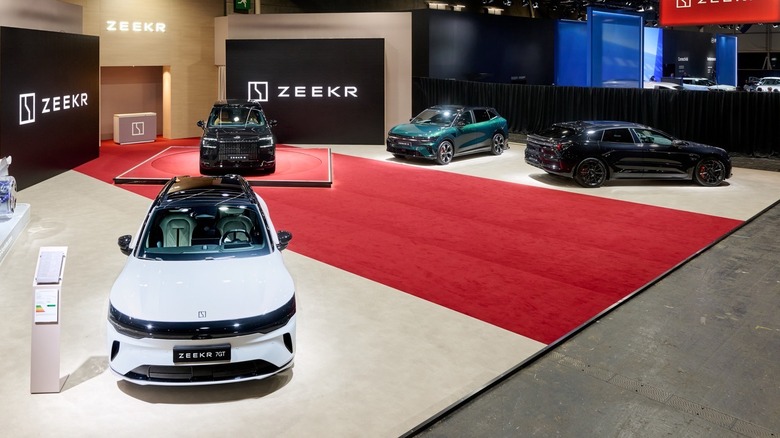
There's hardly a segment of the automotive market without at least one –- but usually several -– new automakers from China trying to compete. Of all the Chinese brands that have gone global over the past couple of years, few have made as much of a splash as Zeekr. Owned by Geely but operating independently, the company is aiming straight at traditional luxury brands with a line-up of five models.
Pursuing customers who are more inclined to buy from brands like BMW, Mercedes-Benz, Audi, Range Rover, and Lexus isn't easy. Owners of these models are often fiercely loyal and place a high value on brand heritage and the badge. Like people who wear designer clothes, even though they're often made in the same facilities as clothes costing one-fifth the price, many are willing to pay a premium for a luxury vehicle based on the name alone, even if it's not objectively any better than a lower-priced alternative.
CarScoops recently had the opportunity to speak with Zeekr's European CEO Lothar Schupet from the Paris Motor Show, and we asked why car buyers should pay a premium for one of its products over an alternative from Germany. According to Schupet, it all comes down to value.
Zeekr says customer expectations have shifted
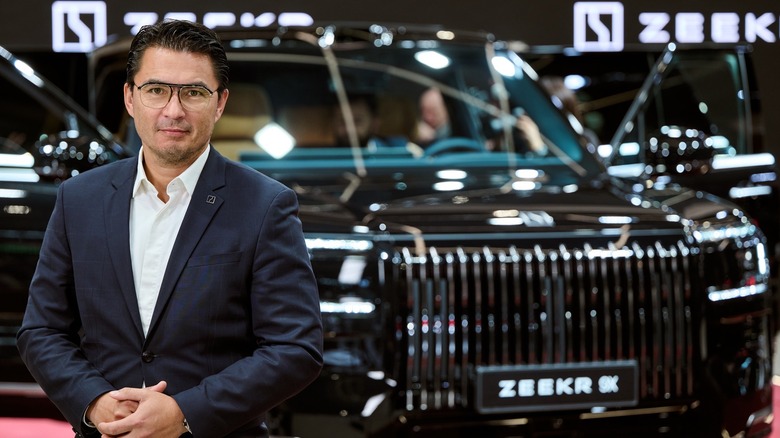
"The real difference is what you get for your money," he told us. "Rather than paying for brand heritage, with Zeekr you get more value, more content and more features, more performance, technology and craftsmanship, while still offering the best price-to-value proposition in the segment. Heritage matters, but it no longer guarantees loyalty. Customers are making up their own minds, and in just three years in Europe that has worked strongly in our favor."
Zeekr now operates in 22 countries across Europe, and it will have a dealer network of 200 locations by the end of this year. Its local sales are up 200% year-on-year and the arrival of the Zeekr 9X, known as the 'Hangzhou Bay Cullinan' in China, will help to further increase demand for the brand's models.
Schupet added that "premium means something different in 2026 than it did even a few years ago," noting that "customer expectations have shifted, and that has opened the door for new brands to become relevant to a much wider audience. We come into this as a high-end challenger with a European soul, backed by the power of a giant. Our cars are designed in Gothenburg and tuned for European roads, and behind that sits the global scale and technology of Geely Auto Group."
The Chinese brand wants to out-premium legacy rivals
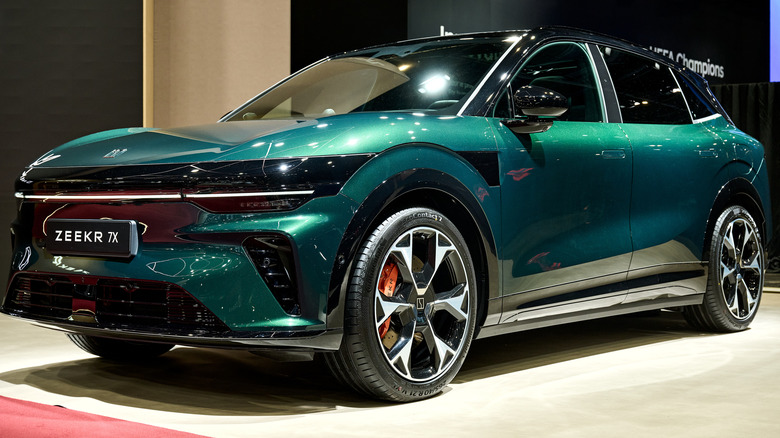
Based on our time with Zeekr's full suite of models, including the 001, X, 7X, 8X, 9X, and 7GT, the company has done a lot right. Its higher-end models already feel more luxurious than current-generation BMW and Audi models, and they cost a whole lot less. Crucially, Zeekr doesn't want to simply sell vehicles by undercutting rivals.
"Our priority is a best-in-class value proposition, but value isn't the same as cheap," Schupet added. "We want customers to feel they're getting more innovation, more craftsmanship and more of a premium experience than they'd typically expect at a given price point. As people get to know the product, the conversation moves away from price and towards what the car actually delivers. The 9X is a good example, it's our first luxury model, and it's defined by what it offers rather than by undercutting anyone."
Then there's the matter of depreciation...
New automakers emerging from China have shown the world that it's possible to sell high-quality vehicles at a fraction of the price of many legacy rivals. However, Chinese electric cars, and EVs more broadly, can suffer extraordinary depreciation, so it often makes more financial sense to buy a used one rather than a new one.
Zeekr brand is aware of this, especially in Europe. At the Paris Motor Show, Zeekr strengthened its local line-up by launching the facelifted 7X and the flagship 9X, two models that'll prove crucial if it wants to rival European brands. Speaking with CarScoops, Zeekr's European CEO Lothar Schupet said the brand isn't only focused on beating competitors on value, but it also wants to assure customers that it can buck the trend of poor residual values common across the automotive industry.
"Residuals are shaped over time by the fundamentals, and that's where our focus is," Schupet told CarScoops. "We build cars to a high standard of quality and safety, and because our vehicles keep improving through the latest technology and over-the-air updates, they get better over their life rather than dating. We also don't offer stripped-back, low-specification versions that can flood and dilute the used-car market later on, which helps protect values over time."
Zeekr is committed to Europe
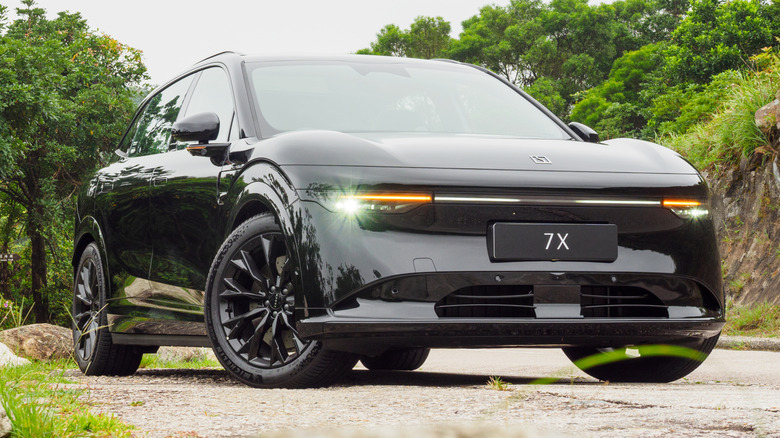
This direction, alongside five-year warranties and "an expanding service network and significant investment in the brand's presence across Europe," gives Zeekr confidence it has the foundations for strong residuals. The company's increased investment and presence across Europe should also give customers confidence, according to Schupet.
"We're investing in Europe for the long term, with our design and R&D presence in Gothenburg, a growing team across our markets, and a target of around 200 sales and service locations across Europe by the end of this year. We're not here for a quick entry. Three years in, we're one of the strongest-performing new brands in Europe, and everything we're building – people, infrastructure, aftersales – is designed to be here for the long run."
The European car market is extremely competitive, and historically, buyers have favored homegrown brands. In the first half of this year, the VW Group alone sold 1.8 million vehicles in Europe while Stellantis sold 1.09 million, Renault sold 683,137 vehicles through the Renault, Dacia, and Alpine brands, and BMW and Mini sold 510,639 vehicles. By comparison, Toyota, the leading non-European brand, sold 479,382 vehicles.
With this in mind, winning over European buyers won't be easy for Zeekr, but Chinese brands are making headway. The Geely Group sold 225,350 vehicles in Europe during the first six months of this year, beating out Ford, Tesla, Nissan, and Mazda, proving there is considerable appetite for these new entrants.