

Hyundai Palisade XRT Pro First Drive: The Skid Plate Isn't Just For Show
It takes more than stickers and big tires to drive off-road, and Hyundai hopes its new Palisade XRT Pro has what it takes to venture further
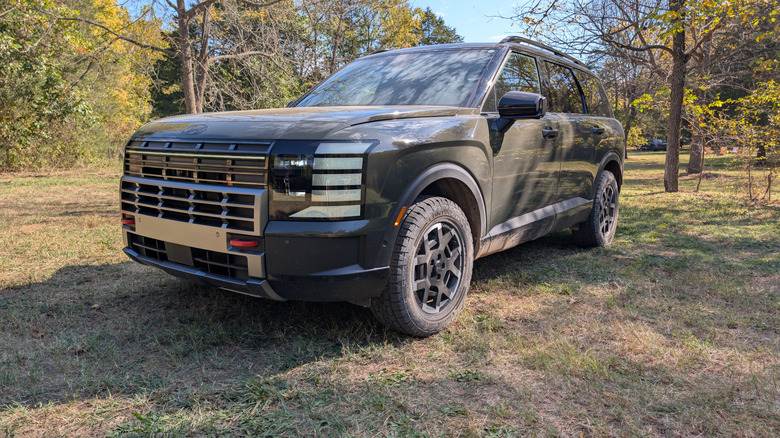
Take a look around the world of off-road-themed SUVs, and you'll notice a trend. Plenty of them feature cool graphics. Some get bright, flashy tow hooks. Very few get a lift kit and a serious skid plate. And that last bit is key because there's a sound that can signal just how legitimate your off-road package is.
At Rush Springs Ranch, it came from underneath the Hyundai Palisade XRT Pro as its skid plate met the terrain. Suddenly, the most interesting part of this three-row family SUV was a piece of hardware most owners will hopefully never need. And, for those listening closely, it signifies a shift for this badge.
Most of the Palisade's existence has been about making the argument that skipping a luxury badge makes sense. It's always offered comfort, space, and enough equipment that considerably more expensive SUVs look a tad greedy. Sure, general adventure was a part of the pitch, but it was a tiny piece.
With the Palisade XRT Pro, that's all changing. All-terrain tires, additional ground clearance, underbody protection, and an electronic limited-slip rear differential add serious hardware to the badge. We drove it on pavement and off-road to find out how much those changes actually matter.
Full disclosure: Hyundai put me up for a couple of nights in a swanky Bentonville Hotel and fed me while I checked out the Palisade XRT Pro and Tucson XRT.
Hyundai provided travel and accommodations to Pineville, Missouri to drive the Palisade XRT Pro and Tucson XRT. CarScoops' opinions are our own.
Styling
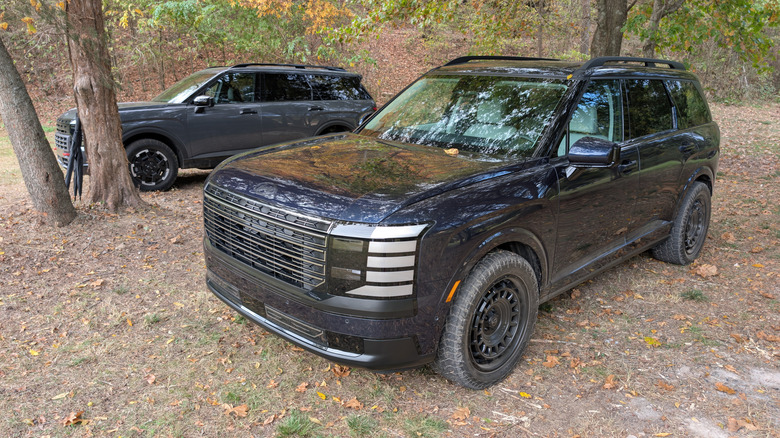
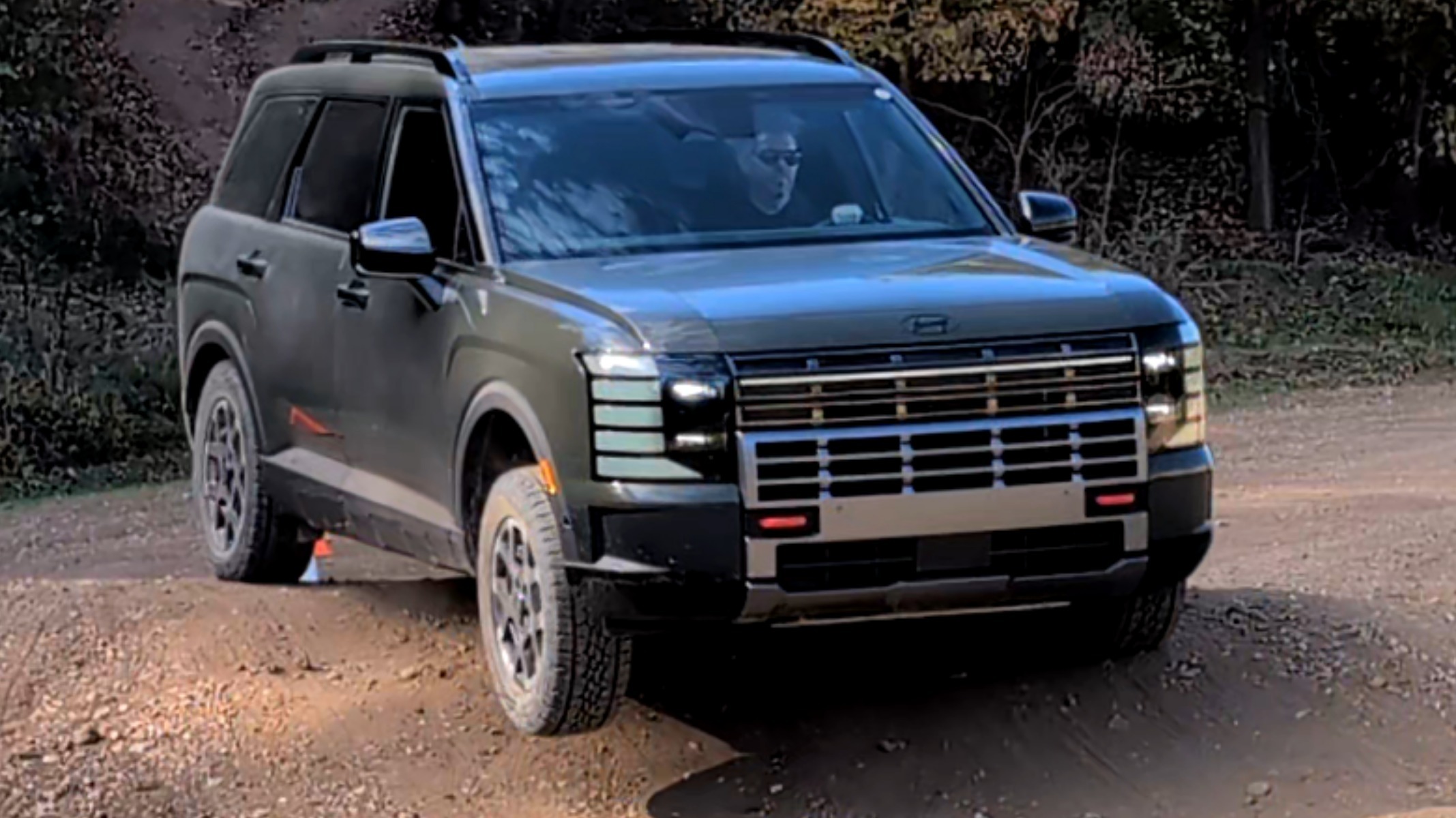
The current Palisade already has plenty of design cues that contribute to an off-road-focused trim. The broad nose, tall body, and very pronounced lighting signatures give it presence. Importantly, that's all before the XRT Pro treatments enter the equation. Plenty of automakers settle for trying to sell ruggedness with black badging and a fun name.
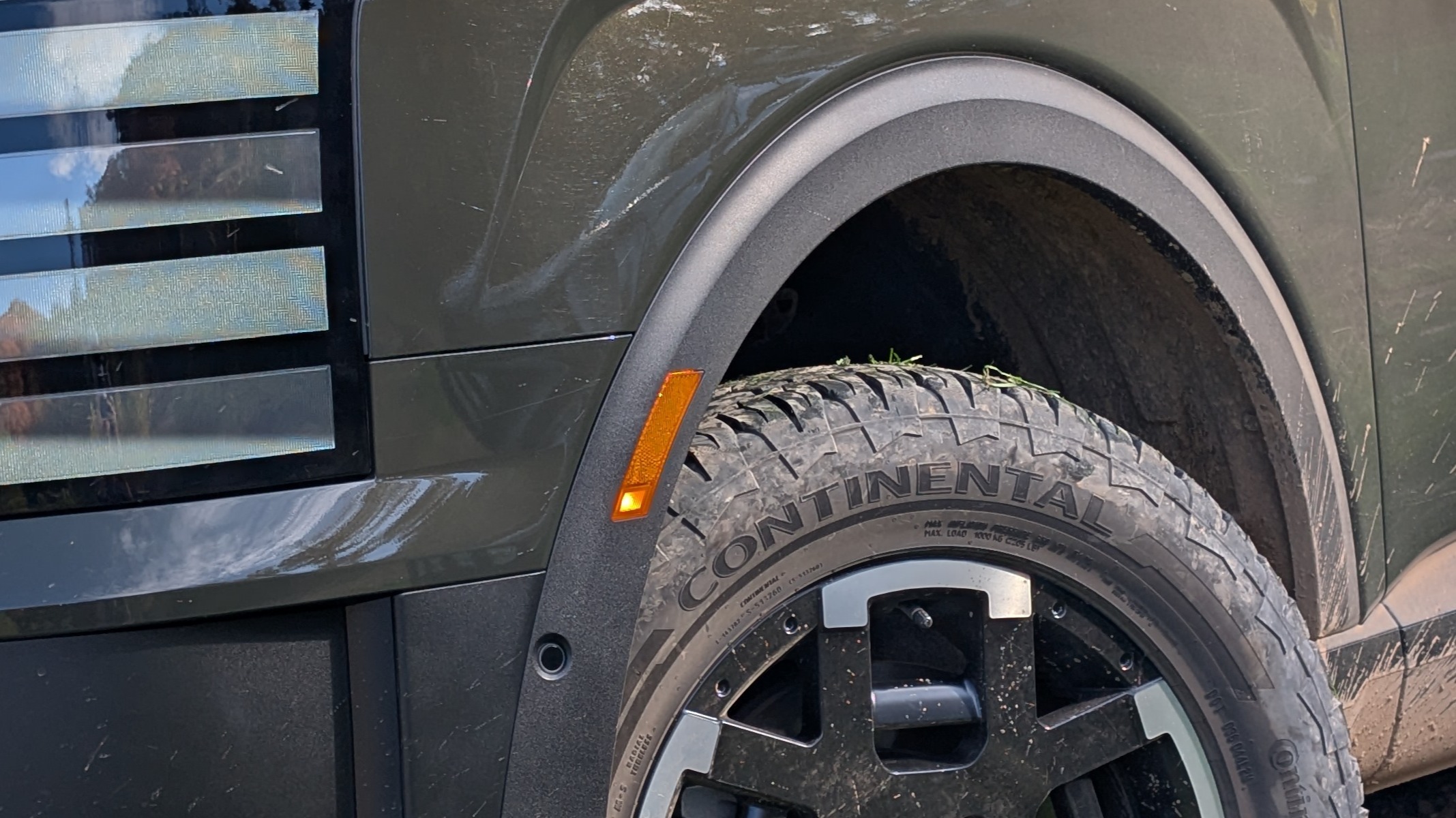
To its credit, Hyundai admitted that the first generation of XRT was basically that. It leaned into styling rather than substance. And it's why this latest version is so key. Looking like a capable off-roader and being a capable off-roader aren't always the same thing. The Palisade XRT Pro is considerably leaning toward the latter than the former. Forget giant rims. Instead, this SUV gets 255/60/18 profile tires and wheels to match them.
Ground clearance grows to 8.4 inches (213 mm), an inch (25 mm) over than the standard model. Hyundai also includes bright front and rear recovery hooks. Those touches are clear on paper, subtle in person, but substantial in the subconscious.
Of course, it remains a large vehicle. At 200.4 inches (5,090 mm) long, this Palisade asks for some consideration when choosing a line through uneven terrain. Its styling communicates adventure well, but its footprint communicates three rows and family luggage.
Cabin
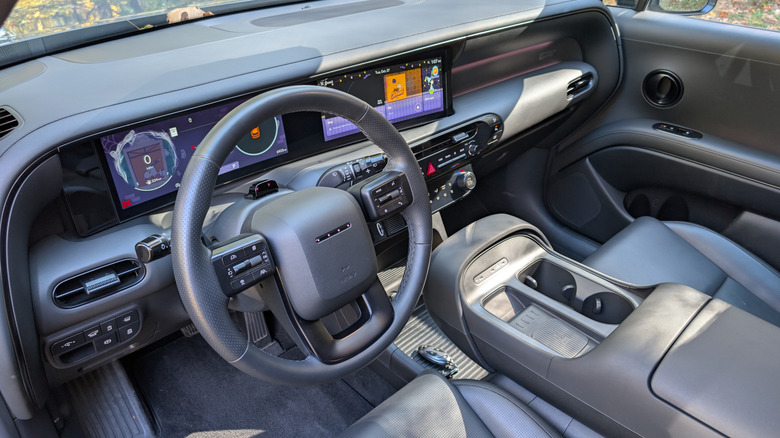
Slip into the Palisade, and there's an interesting balance. The name has always, even before the SUV, transmitted the idea of luxury. In this form, especially with the addition of XRT Pro, it has to find a balance between that and ruggedness. In terms of luxury, the vehicle continues to deliver in terms of space. In addition, the displays are bright, crisp, easy to read, and easy to navigate.
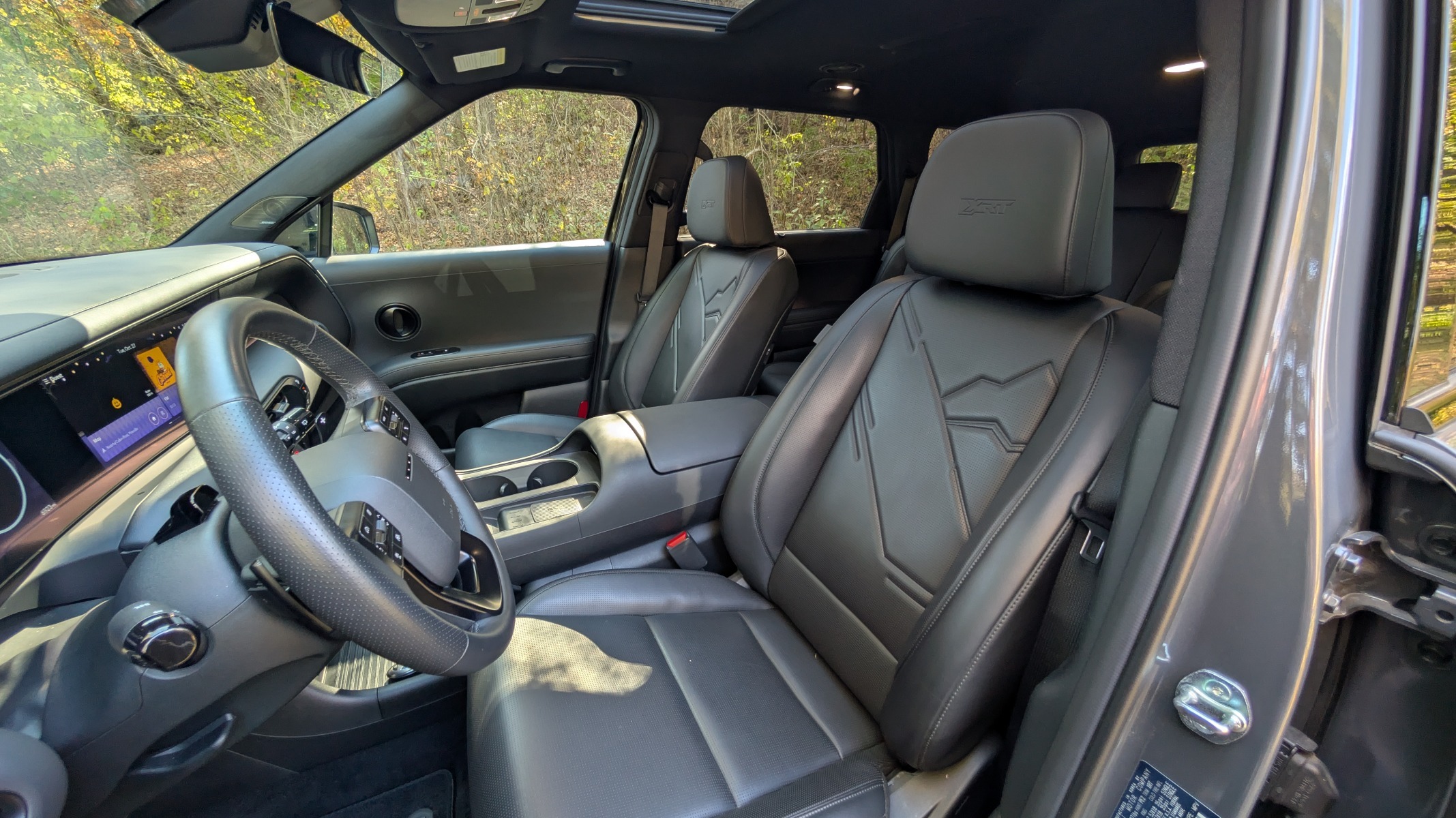
The general design is fine but could perhaps benefit from a little more fun. Our test vehicle leaned heavily on gray and black, and a few brighter accents would have given it more character. Hyundai has clearly put effort into making this version feel distinct, including the seat embossing and small matte-metal details that extend into the second row. A little color could have helped those touches stand out.
That said, most of the design should age well. The broad surfaces and straightforward arrangement aren't trying too hard to be fashionable. Some of the rounded detailing might date sooner, but there's little here that feels trendy for trendy's sake. Importantly, the material choices are very interesting and appropriate.
 Stephen Rivers/CarScoops
It would've been easy for Hyundai to slap the same textures and finishes from higher-grade trims, such as the Palisade Calligraphy, into this SUV. Instead, the XRT Pro uses H-Tex upholstery, which should manage dirt, mud, and everyday off-road use much more effectively.
Touch interfaces
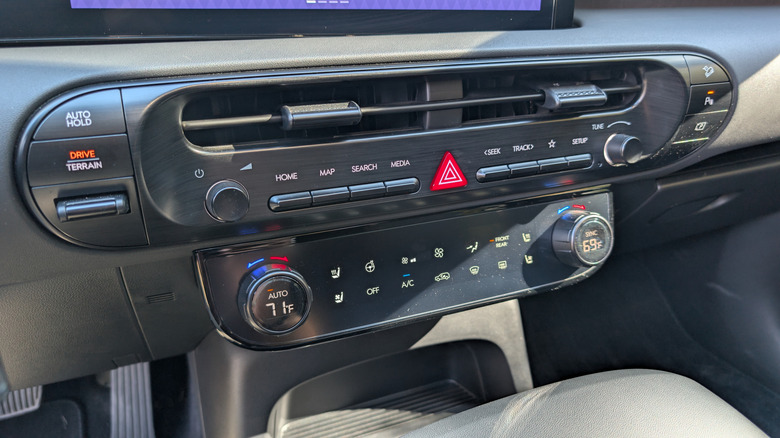
Moving into the touch interfaces, it's worth noting that Hyundai mostly leverages physical switchgear for most functions. That's great, but not every control is physical. Fan speed, air conditioning, and the seat-heating controls involve touch inputs. They're manageable, but a physical control would be easier to locate and operate by feel. In an otherwise sensible cabin, it's a small frustration that turns up often enough to notice.
 Stephen Rivers/CarScoops
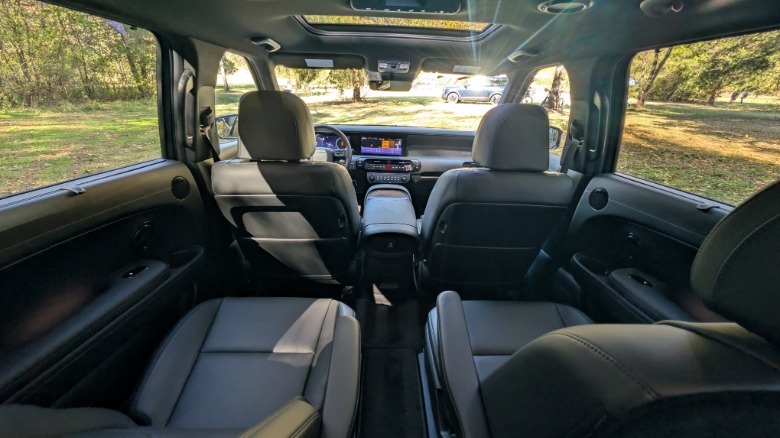
The second row is a highlight for comfort and space. Each seat gets cool embossing and top-notch adjustability. The third is, as is the case with most cars in this space, more of a compromise. Kids should be happy enough, but adults will find it less accommodating, particularly compared with the room available ahead of them.
At least Hyundai hasn't entirely forgotten the people sitting back there. Charging ports, cupholders, and climate vents give third-row passengers the basics they need. Those details matter. Cargo capacity is 19.1 cubic feet behind the third row, growing to 46.3 cubic feet with it folded. Drop both rear rows, and Hyundai quotes 86.7 cubic feet. Both rows go up and down with manual controls.
Driving impressions off road
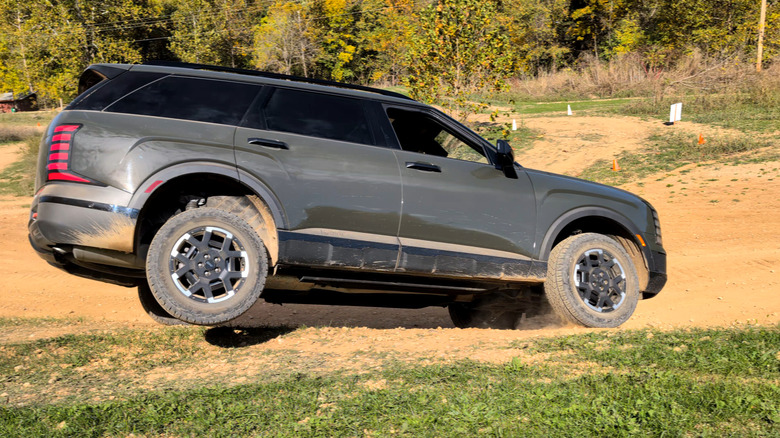
The XRT Pro uses Hyundai's 3.5-liter V6, producing 287 hp (214 kW) and 260 lb-ft (353 Nm), with an eight-speed automatic and standard HTRAC all-wheel drive. That last part is worth clarifying. All-wheel drive isn't the same as 4WD, and this SUV might be the best way to demonstrate how the differentiation matters on paper but not always on the trail. 4WD mechanically sends power to all four tires. AWD often gets to be a lot more selective.
For example, Hyundai says it sends all engine power and torque to the front wheels alone in most situations. That said, it still sports an electronic limited-slip differential in the back, which itself is a middle ground between a conventional rear torque splitter and a locking rear axle. Compromise or not, on the trails we drove, it did just fine. Rush Springs Ranch gave us dirt, loose gravel, rocks, and uneven sections that put individual wheels in the air.
Measured expectations
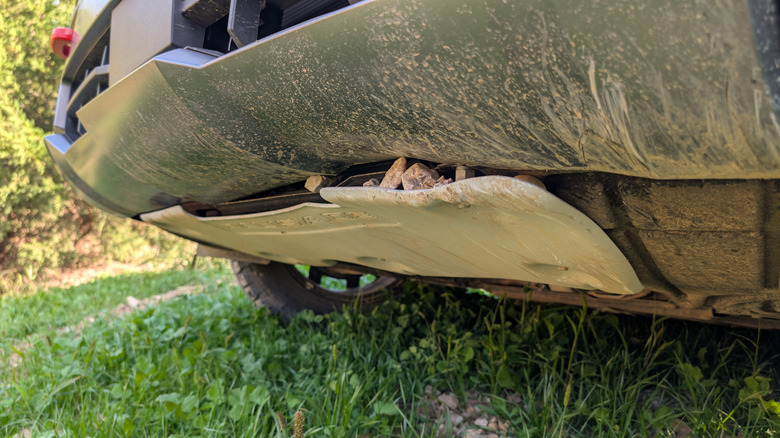
There were enough changes in surface and elevation to make the traction systems work, and enough contact underneath to demonstrate why protection belongs on a vehicle sold for this purpose. One sincerely impressive moment came on an 18-degree pitch. I approached the hill slowly, intentionally trying to sort out just how well the Hyundai would manage its power and traction. After a very brief slip on one tire, the SUV collected itself and climbed the rest of the way without issue.
It might sound underwhelming, but that was the extent of the drama. Some sections left a wheel in the air, but the SUV never struggled or stumbled. It just kept making steady progress. The skid plate was especially worthy of note. We made contact with it a few times and in the end found plenty of evidence of that, both with scars across the steel and with a few rocks stuck between it and the plastic undercarriage. However, no matter how much you shake it, the metal did its job. That said, there are a couple of caveats worthy of mention.
 Stephen Rivers/CarScoops
The automaker pre-selected this course. It had plenty of obstacles blocked off, so it's tough to unequivocally say what a dedicated off-road BOF SUV would do by comparison. At the same time, it offered a lot more range and freedom than the same type of event put on by other brands. In addition, our test vehicle showed more than 10,000 miles (16,093 km). There's no telling how many of those were off-road, but it does remind us that this wasn't some dedicated press fleet car fresh off the line and tailored to our experience.
On Road
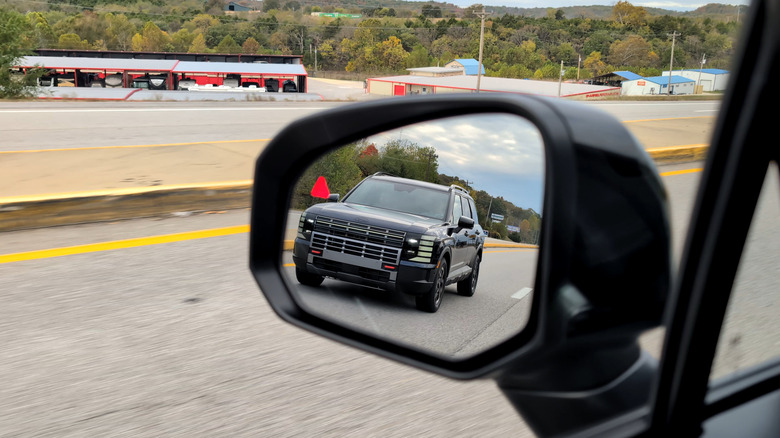
On pavement, the overall impression remained positive. The XRT Pro still felt comfortable enough to serve as the family's everyday SUV, which is, let's be real, where most of these vehicles will spend most of their time. In that setting, it'll be plenty plush for the average buyer. Sit someone blindfolded in the second row of this, and then swap them into anything else in the segment at this price point, and it would probably win on feel alone. That said, there's at least one potentially major drawback for some buyers.
Fuel economy is the clearest compromise. Hyundai lists EPA estimates of 16 mpg city, 22 highway, and 19 combined (14.7/10.7/12.4 L/100 km). For a vehicle likely to handle school runs, errands, and long family trips, that deserves attention. Buyers may only use the additional trail capability occasionally, but they will pay for the fuel regardless of what's under the tires.
Competition
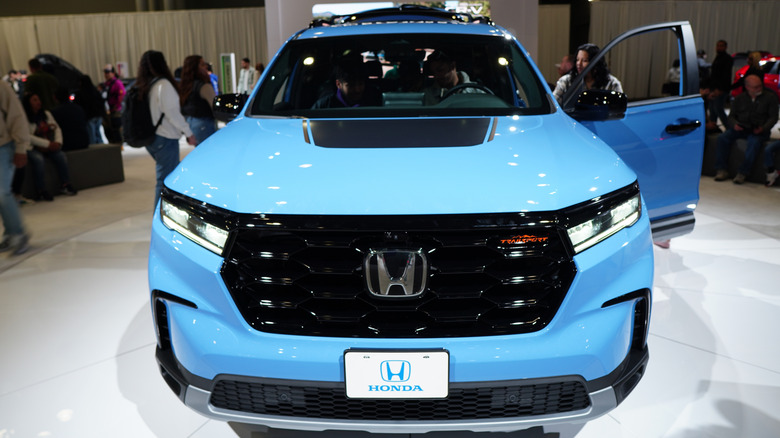
The Honda Pilot TrailSport is an obvious vehicle to put on the same shopping list. Both appeal to families who want three rows and enough extra capability to make venturing beyond pavement feel reasonable. Cabin fit, everyday comfort, equipment, and the final transaction price will matter as much as the off-road pitch.
The Ford Explorer Tremor is another alternative. It puts a different spin on the rugged family SUV, and shoppers should drive both on the roads they'll actually use before allowing a trail photograph to make the decision. It's worth noting that it features a RWD-biased AWD system so that benefits those who enjoy driving at the limit on pavement.
Then there's the Kia Telluride, a vehicle that has shared so much of the Palisade's appeal. Comparing the current trims and equipment closely makes sense, particularly now that Hyundai has given its SUV a more legitimate outdoor identity. That said, styling, brand identity, and price could sway buyers either way.
Verdict
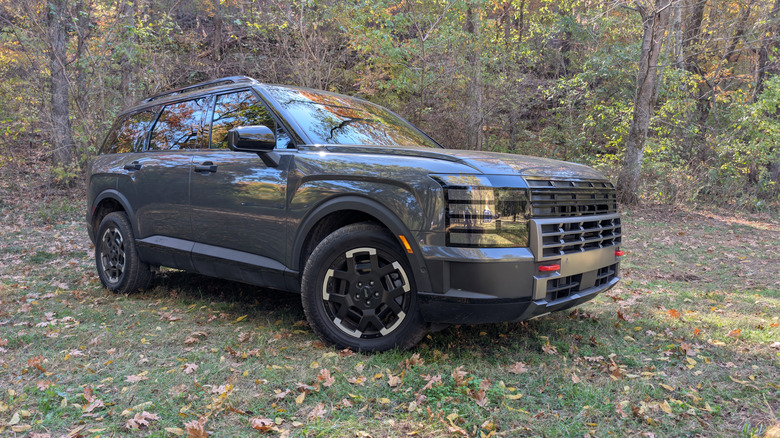
The Palisade has never been a bad buy in terms of value or features. The XRT Pro manages to keep the family aspect of that purchase motivation intact and add sincere off-road capability at the same time. At around $51,000 including destination, it's hard to argue against this if you're planning on going off-roading regularly and routinely carry three rows worth of humans and gear.
Most SUV owners — and we'd even argue most off-road-themed SUV owners — will never take it on trails as hard as we just tackled. They're ultimately cosplaying as rugged folks, and they'd be better suited spending a lot less on the vehicle they actually need. That said, for the crew actually planning to take the road less traveled, the Palisade XRT Pro is more than adequate in most environments. This is absolutely a step in the right direction as the brand tries to get deep into the off-road scene.
 Stephen Rivers/CarScoops