

The MGS6 Is A Great Electric SUV, But It Doesn't Stand Out | Review
Excellent specs can’t hide a lack of originality.
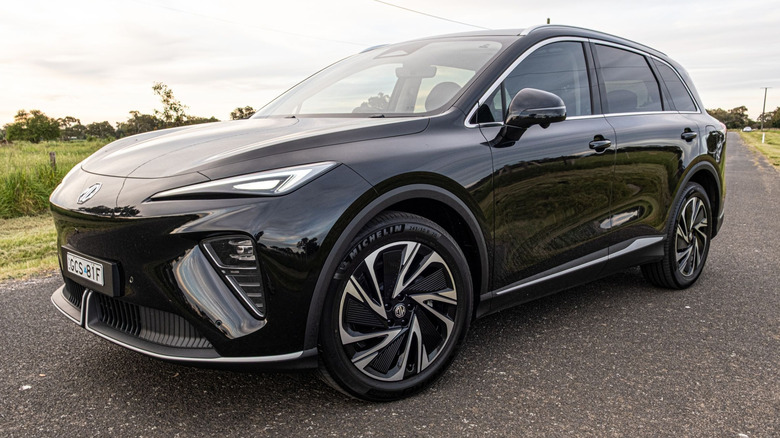
For Australians, there's never been a better time to be in the market for an all-electric, mid-size SUV. Just a few short years ago, the Tesla Model Y was the only competitive option in this segment. Now, a dizzying array of new entrants from China have arrived, each attempting to snatch the crown from the Model Y, which comfortably remains the nation's best-selling EV.
The 2026 MGS6 is one of the newer arrivals, produced by MG Motor — a division of China's SAIC Motor. The Chinese brand put the local EV market on notice when it launched the affordable MG4 in late 2023 as one of the nation's cheapest EVs. It has since expanded its range and moved upmarket with the MGS6, competing not only against the Model Y but also aiming to take the fight to the BYD Sealion 7, Zeekr 7X, Jaecoo J5, Kia EV5, and Hyundai Elexio.
Eager to see if it gets anywhere close to these models, we had the chance to live with the MGS6 for a week. It proved itself to be just as impressive as some of its compatriots while also serving as a compelling alternative to rivals from legacy brands. It's not perfect, however.
Breaking down the MGS6 range
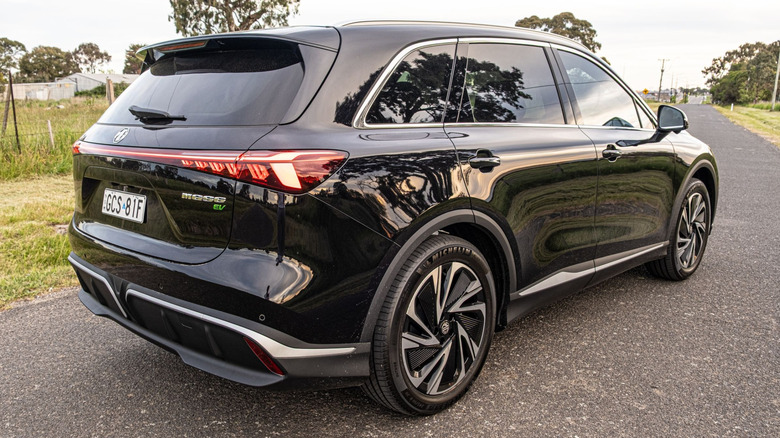
Two versions of the MGS6 are available for 2026. The entry-level EV Essence RWD is priced from AU$49,990 ($35,100) and comes equipped with a 77-kWh nickel-manganese-cobalt battery and promises up to 530 km (329 miles) of range on the WLTP range. Sitting above it is the EV Essence AWD, which we drove, starting at AU$56,990 ($40,000). It uses the same battery but has two electric motors, delivering a combined 266 kW (357 hp) and 540 Nm (398 lb-ft) of torque.
Unlike some competitors, including the Zeekr 7X, the MGS6 uses a 400-volt electrical architecture and DC charging tops out at 144 kW. That's a shame as it means charging from 10-80% takes 38 minutes, while many competitors can charge in less than 20 minutes. The added power of the all-wheel drive model also reduces the combined driving range to 485 km (301 miles).
Although MG under Chinese ownership first made a name for itself with budget and basic combustion-powered hatchbacks and SUVs, the 2026 MGS6 is a more premium product. This is immediately evident when you step into the cabin, as it reveals itself to be spacious, stylish, and well-appointed, just as it needs to be to compete in this market. And family buyers will be pleased to know that the second row is excellent and spacious enough for teenagers and adults.
This is no ordinary MG interior
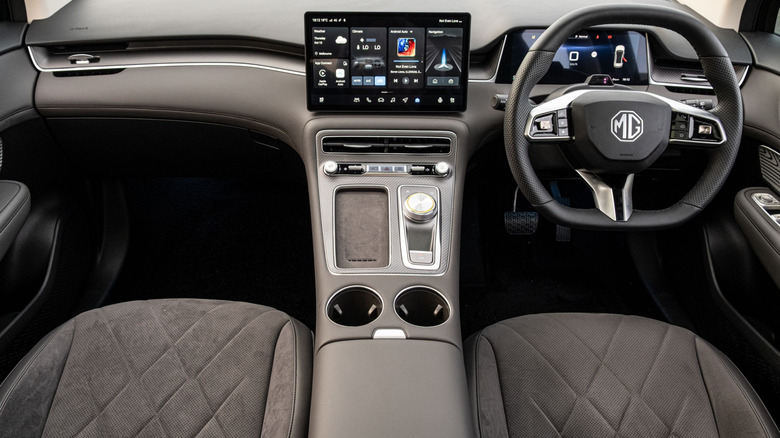
The two displays -– a 10.25-inch digital gauge cluster and a 12.8-inch infotainment screen -– are smaller than some of the competition, but they definitely don't feel dated. Wireless Apple CarPlay and Android Auto are supported, although we experienced multiple disconnects with the Android Auto.
MG's homegrown software has been well-designed and is simple to use, but on vehicle start-up, it takes a while for the displays to turn on, which is a bit of an annoyance. Perhaps the best thing about the MG system isn't a feature it has, but rather something it doesn't have. MG has opted not to include all the climate controls into the screen. Instead, there are physical fan speed and temperature dials positioned below the central air vents.
 Brad Anderson/CarScoops
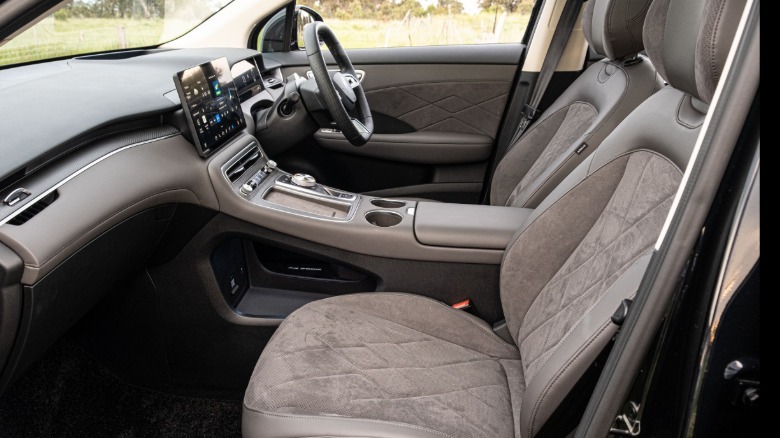
The cabin of the MGS6 has been well appointed in a combination of vegan leather and synthetic suede — our car had the standard black interior, but a gray ivory option is available. Rather than using any annoying piano black on the console, MG has instead fitted stylish faux carbon fiber trim that looks premium and feels nice to the touch. Similarly, the seats are supple and supportive, and the driving position is good. Other welcome features include a standard panoramic glass roof and a head-up display.
The biggest disappointment with the cabin is the audio system. Both MGS6 Essence models use an 11-speaker audio system that MG describes as "premium." It's the complete opposite and feels budget. In fact, it's the worst audio system of any EV in this segment. It lacks clarity and has almost no bass, despite having a sub-woofer. Taking a deep dive into the equalizer settings did little to improve it either.
It drives like a premium EV should
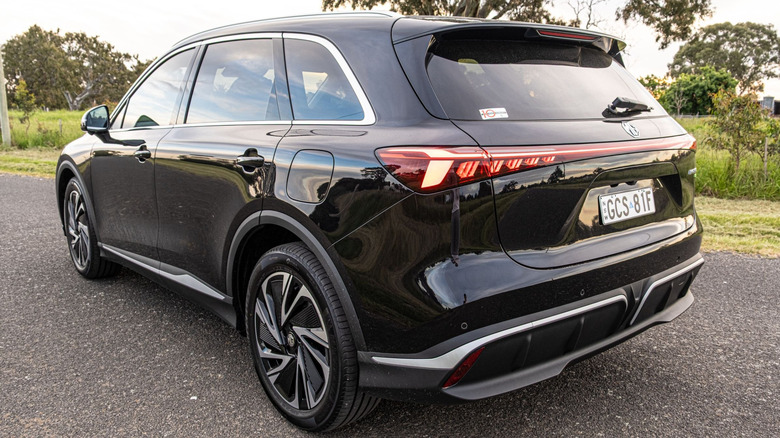
The premium feel of the MGS6 extends beyond the interior experience as it's also a lovely SUV to drive and live with on a daily basis. However, it has some annoyances and lacks some of the features of rivals, in particular the Zeekr 7X.
First, the good. With 266 kW (356 hp) and 540 Nm (398 lb-ft), the MGS6 is properly quick, requiring just 5.1 seconds to hit 100 km/h (62 mph) from a standstill. Interestingly, it hasn't been tuned to deliver a brutal kick in the back when you hit the accelerator, and rather builds speed in a progressive and smooth manner. Before you know it, you're doing the speed limit.
MG has also done a good job of calibrating the SUV's steering. Yes, it's void of feel like most electrically assisted steering systems out there, but it's direct and includes three different weight settings. I left it in the lightest mode for most of my time with it, finding it to be just as well suited to maneuvering through a carpark as it was on the highway.
Like most electric SUVs in this segment, the ride of the MGS6 is on the firmer side. MG has clearly given the S6 a bit of a sporty edge, though I think it could benefit from a slightly softer spring and damper set-up. That's not to say it's uncomfortable, as it's not. It just has a slight tendency to crash over particularly harsh bumps.
It's smart and efficient
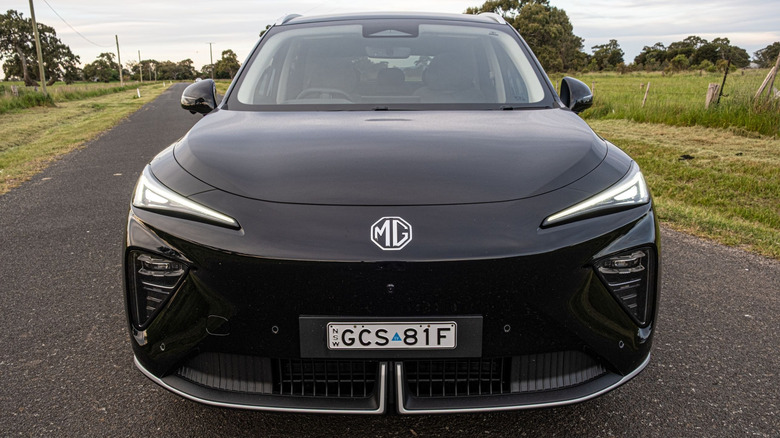
All MGS6 models come standard with the MG Pilot suit of ADAS systems, including adaptive cruise control, active emergency braking, blind spot detection, and lane departure warning. The adaptive cruise control and active lane centering could do with more work as the SUV has a tendency to run tight to lane markings, rather than keeping in the center of the line.
MG Pilot is also where you will find settings for the speed limit warning, driver distraction warning, and driver fatigue warnings. All three generate an infuriating array of beeps that'll upset even the most patient of drivers. Fortunately, you can disable all three by setting up your MG Pilot Custom preferences. Once these are set, it's possible to turn off all three systems by swiping down on the touchscreen and enabling MG Pilot with a single tap. As you can imagine, I did this every time I got behind the wheel.
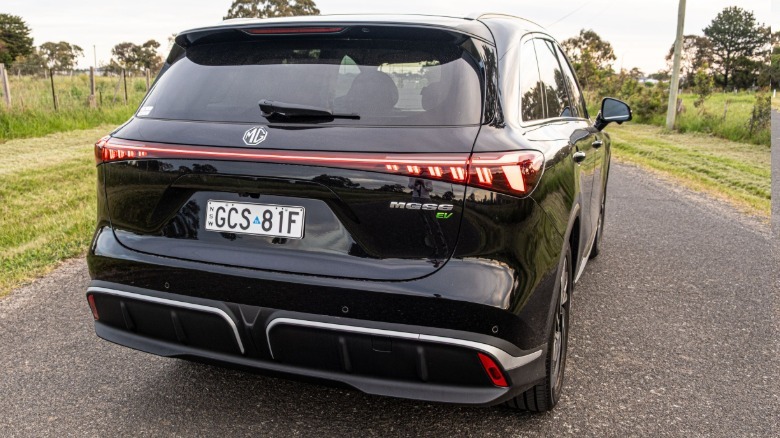 Brad Anderson/CarScoops
Grip from the all-wheel drive system is excellent in all conditions, including in the rain, and the MGS6 doesn't have any torque steer issues, putting its power to the ground without interruption. The calibration of the brake pedal could be improved, as it feels a little over-sensitive, but it's not a big issue. Four standard settings are available for the EV's regenerative braking, in addition to a dedicated one-pedal mode, perfect for owners who are looking to maximize efficiency. Speaking of efficiency, MG says the S6 averages 16 kWh/100 km. We managed to beat that figure, ending our week at 15.4 kWh/100 km. Given the performance on hand, that's a very respectable figure.
Verdict
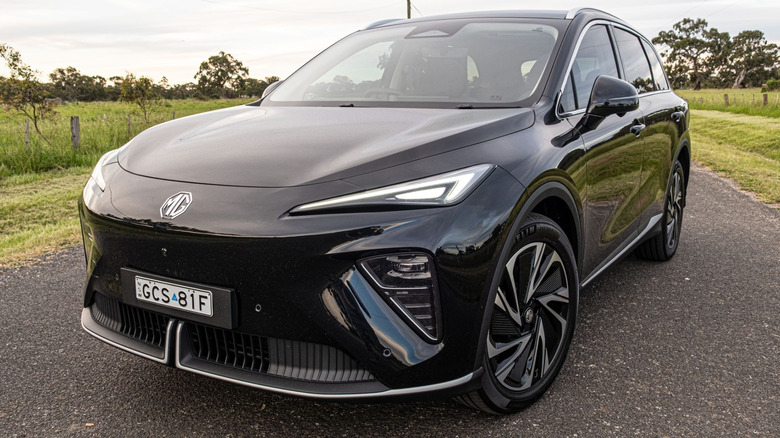
MG has done an excellent job with the MGS6, creating an SUV that feels vastly more refined than some of its cheaper models. The stylish is rather unremarkable and it'd be nice if the S6 looked a little more dynamic. Still, it looks relatively sleek, and the interior really stands out. The cabin, combined with a composed, efficient, and refined powertrain, makes the S6 a serious contender.
It feels more premium than the Hyundai Elexio and Kia EV5, and drives better, too. The AWD model is also just AU$2,000 ($1,400) more than a rear-wheel drive BYD Sealion 7, or about AU$7,000 ($4,900) less than the dual-motor Sealion 7 Performance. However, the S6 doesn't feel quite as special as the BYD, nor does it charge as quickly. Then there's the Zeekr 7X, priced from AU$57,900 ($40,700) in rear-wheel drive guise. It doesn't have as much power as the MGS6 AWD, but it has much more impressive technology and feels like a more premium product. The MG comfortably undercuts the Tesla Model Y which starts at AU$58,900 ($41,400) in rear-wheel drive guise, though it's not as well rounded. Overall, the MG is a solid choice, but certain buyers may benefit from stretching their budget and opting for one of these rivals.