

Your Car's D3 Gear Has A Purpose, And Here's What It Does
We've all heard of P, R, N, D, and L, but what about D3?
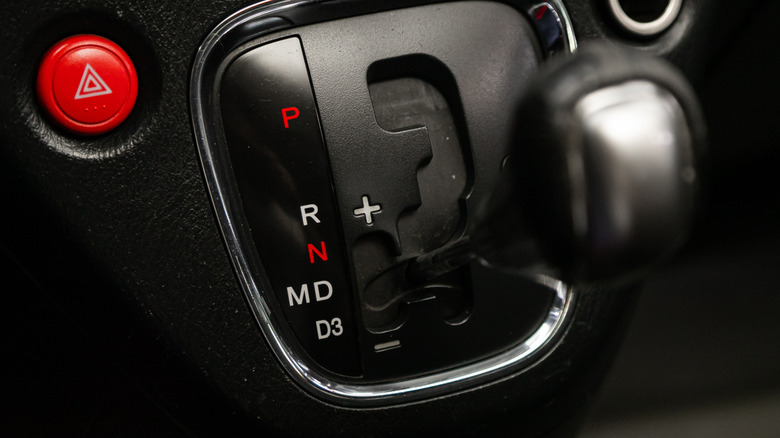
Mastering a clutch pedal and manual gearshift is one of the trickiest challenges facing learner drivers, and choosing a car with an automatic transmission removes all of it. But while driving an auto is simpler than learning stick shift — D for drive, R for reverse, right pedal for go, left for stop — it may still leave you confused. You might have seen a D3 position on your car's gear shifter and had no idea what it's for or when to use it.
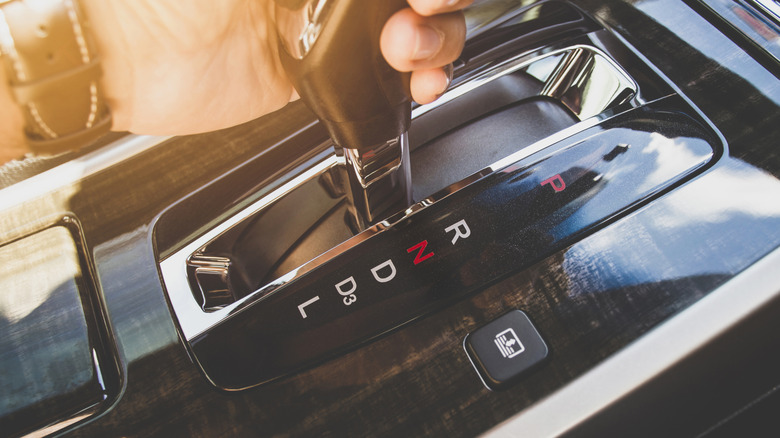
If you have seen a D3 mode, it's probably been on the shift panel of an older Honda or Acura with a traditional automatic transmission, one that uses planetary gears to create different ratios. Since the 1980s, most automatics have had at least four gears. Although the transmission will happily swap between them all by itself, that D3 position gives you more control.
The D in D3 stands for drive, as you've probably guessed, but selecting D3 doesn't lock the transmission into third gear. Instead, it means the transmission can use any gear up to and including third gear, but won't go any higher. On some cars with five or more gears, you might also see a D4 marking, which locks the transmission into the lowest four gears.
When should I use the D3 gear position?
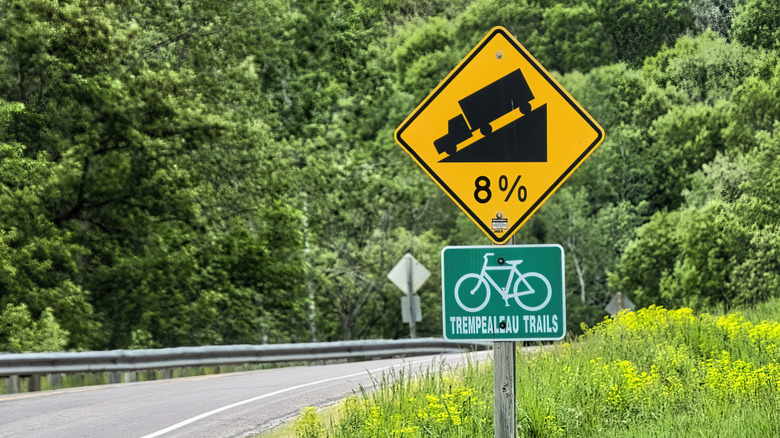
Automatics are big on convenience compared with the manual alternative, but they're not great on control. This is where D3 comes in. When driving downhill in a manual, rather than coasting in neutral, you're taught to put the car into a lower gear to make use of the engine braking effect. This phenomenon occurs because you're not touching the accelerator, meaning the engine's throttle is closed, which makes it harder for the pistons to move down their intake stroke.
Engine braking is useful because it takes the pressure off the conventional friction brakes bolted behind your wheels, helping to safeguard them from overheating. Automatics don't offer as much engine braking when left in their normal D mode, because they'll often stay in a high gear. By selecting D3, you force the engine to stay in a lower gear, just like shifting to third in a manual car.
That engine braking effect is also one of the reasons you might select D3 on a fun, twisty road like the Tail of the Dragon. Another is that forcing the car to stay in a lower gear makes it feel punchier when you nail the gas coming out of each curve. But don't get too excited. D3 is not the same as the sport mode on some automatic transmissions, which has a dedicated shift map that will downshift earlier and hang onto gears longer before shifting up.
D3 is also useful for climbing hills and towing
Going downhill or blasting along a country road aren't the only situations when you might want to prevent your automatic transmission from changing up past third gear. It can also be handy when climbing hills or towing.
Automatics will happily change down gears to get you up a long grade, and most of the time they'll pick the right one. But sometimes they can end up cycling between gears, changing up a gear for a few seconds only to change back down again almost straight away. As you can imagine, that gets pretty annoying for the driver and passengers.
Selecting D3 can help solve that problem by preventing the transmission from shifting up into too high a gear in the first place. It can be useful when you're driving up a hill even in a lightly loaded car, but you're even more likely to get the benefit while towing a trailer or a boat.