- Volvo has reported a significant decline in revenue and income for the first quarter.
- The company blamed a variety of issues and is embarking on a cost cutting plan.
- Its South Carolina plant is set to play an important role in Volvo’s U.S. plans.
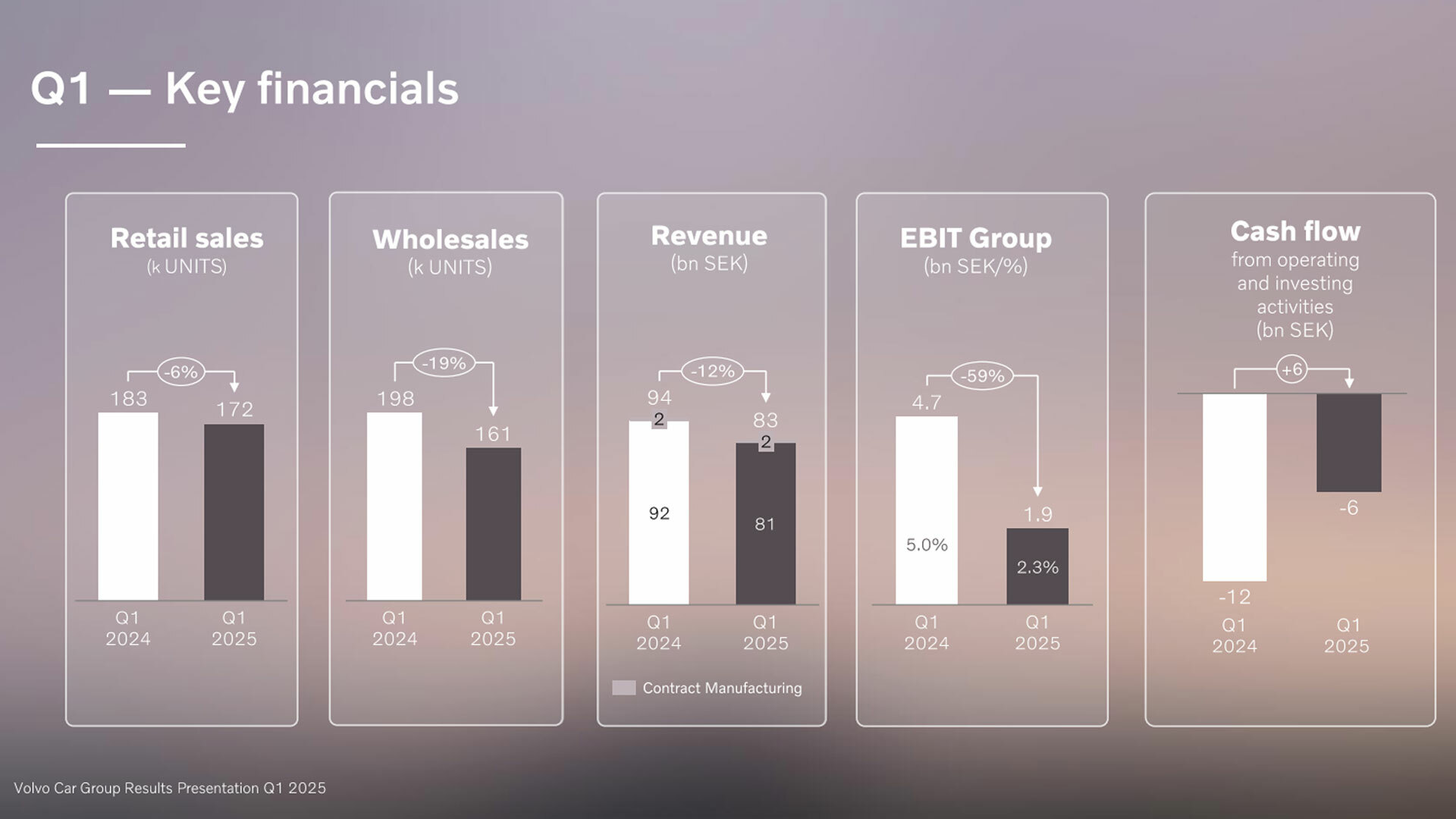
Volvo Cars has reported a dismal first quarter as revenues fell 11.7% from a year ago to 82.9 SEK ($8.62 / €7.57 / £6.43) billion. The company’s operating income also plummeted from 4.7 SEK billion ($489 / €429 / £365 million) to 1.9 SEK billion ($198 / €173 / £147 million).
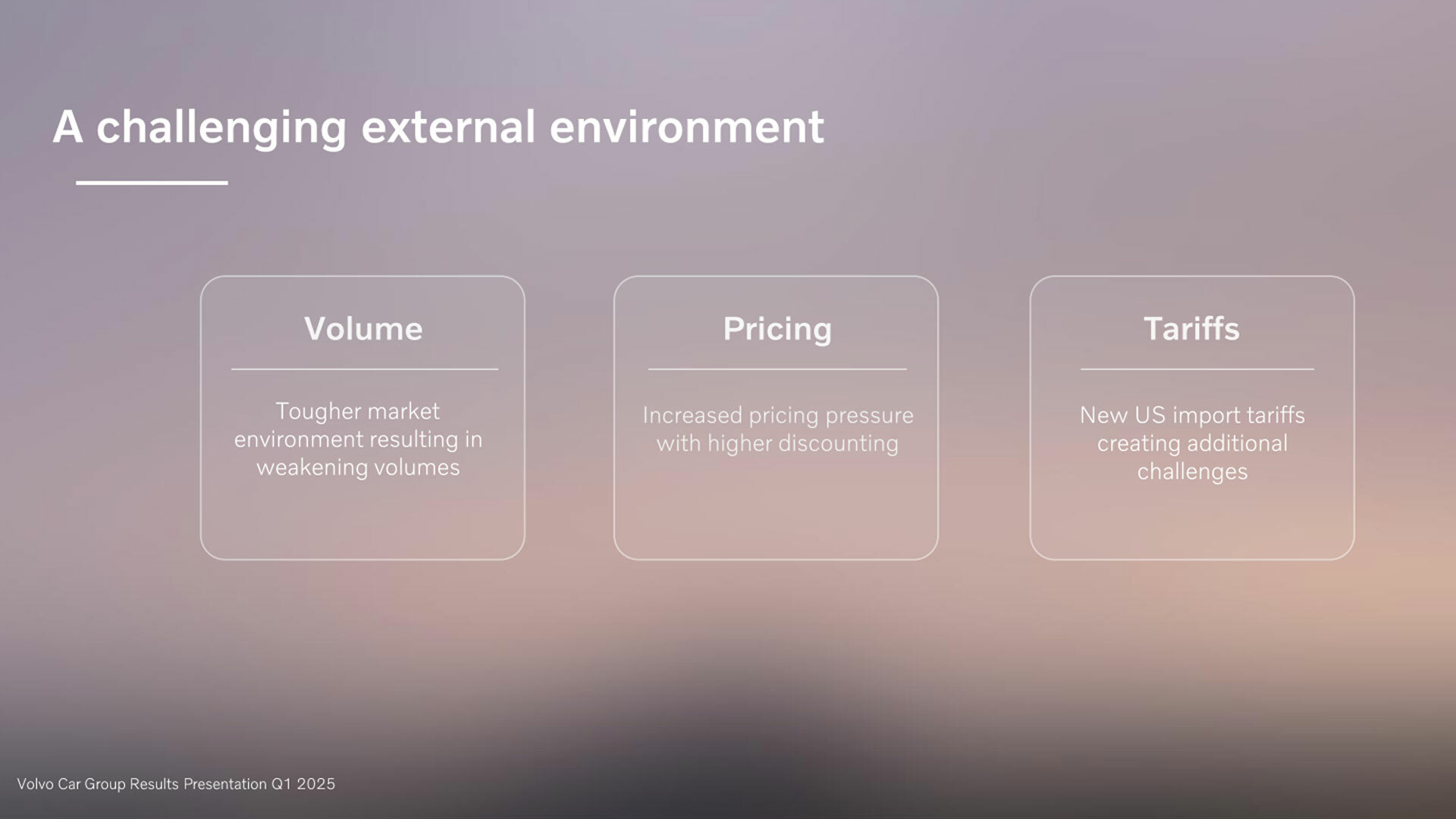
The automaker blamed the declines on the “current turbulence in the world and a challenging external environment for the automotive industry.” The company also cited Trump’s tariffs as well as increased pricing pressures that have resulted in higher discounts.
More: Volvo To Introduce 5 Models In 2025, EX60 Coming In 2026
To help right the ship, Volvo has launched an “accelerated cost and cash action plan” totaling 18 SEK ($1.87 / €1.64 / £1.40) billion. The company didn’t go into many specifics, but mentioned reduced investments and lowering costs. Speaking of the latter, Volvo will work with Geely to slash product costs.
Besides cuts, Volvo believes they need to take a more regionalized approach to better deliver the products and technologies that each region wants. Their initial focus is on China and the United States, which are two of the most important markets.
In China, they’ll launch their first range-extended model later this year. The company said it’s a “good example of its ability to tailor products to different demands in different markets.”
As part of their focus on the United States, the company is creating a new Americas group, which also includes Canada and Latin America. Volvo said the restructuring “further simplifies the company’s global operations into three streamlined regions: Americas, Greater China, and Europe & Rest of the World.”
Since Volvo relies heavily on China, Trump’s tariffs are a big problem. To get around this, the company will “better use its existing manufacturing footprint” in America in the coming years. The automaker said this will result in them “producing more cars where they are sold.”
Volvo also promised to “sharpen” its U.S. product lineup. There’s no word on specifics, but the company has already announced a new EX60 is coming in 2026.
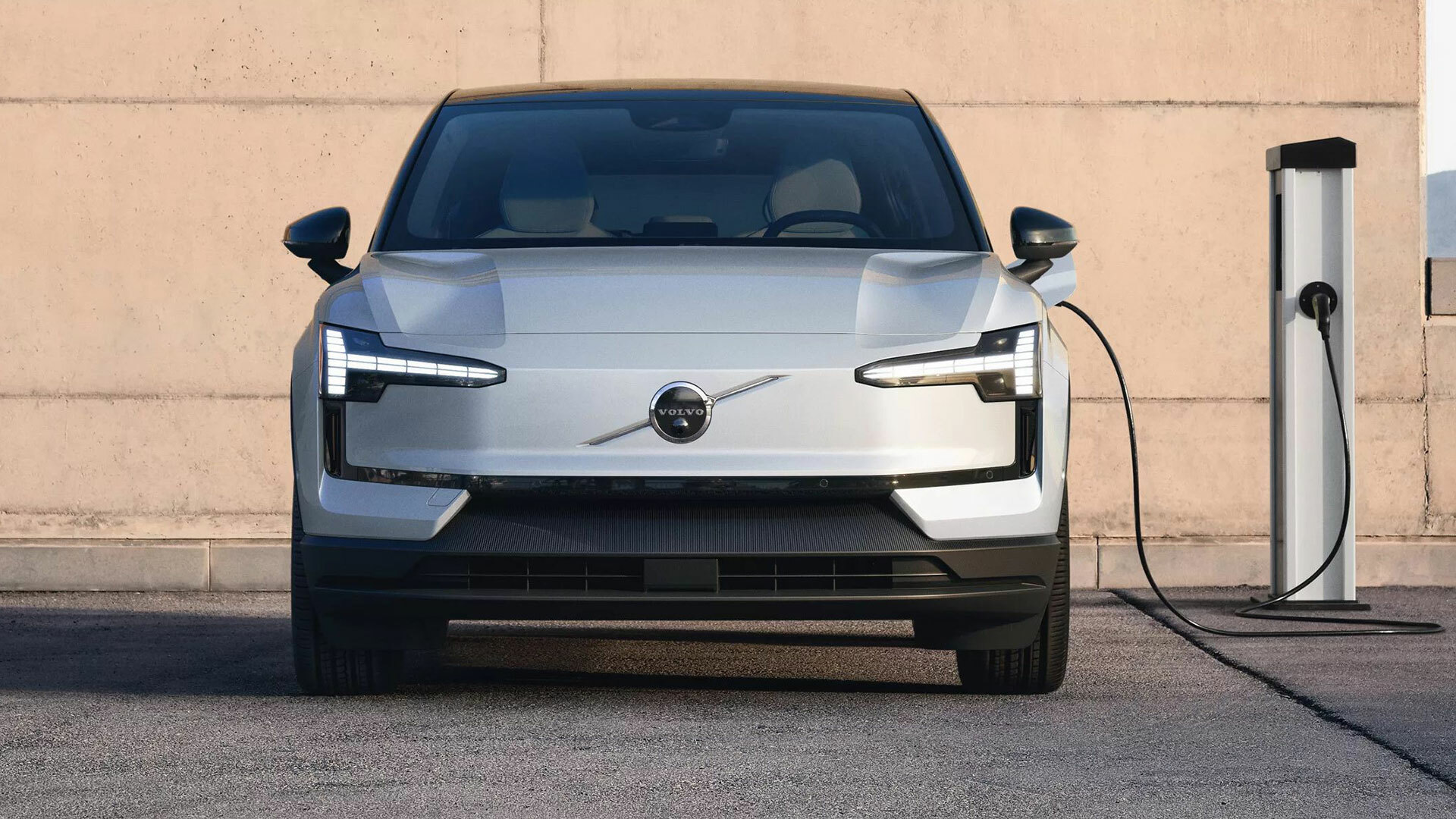
Speaking of production, the EX30 recently went into production in Ghent, Belgium and this effectively solves the crossover’s ‘China problem.’ Production is slated to ramp up in the second half of this year and it can’t come soon enough.
Sticking with EVs, Volvo noted nearly a fifth of sales came from electric vehicles in the first quarter. Furthermore, 43% of sales came from electrified models.
While there are some positive developments on the horizon, Volvo said “2025 will be a challenging and transition year given the uncertainties around macroeconomic, geopolitical and market developments.” The company went on to say they expect “tougher market conditions and lower volumes combined with increased price pressure and tariff effects” that will impact profitability.
Given these developments and “increased uncertainties,” Volvo suspended their financial guidance for 2025 and 2026.