- A Jeep Wrangler owner faced a strict JCI inspection failure in Japan.
- The headlights were too far from the edge of the extended fenders.
- Using tape and cardboard boxes, he managed to pass the safety check.
Anyone who’s tried to bring a modified or imported vehicle to Japan knows that even the tiniest deviation from official guidelines can sink you in the country’s Compulsory Inspection (JCI) tests. One US Air Force member found the loophole in that logic. Compliance doesn’t have to be pretty. It just has to meet the letter of the law.
The Jeep Wrangler in these photos, headlights and all, cleared the safety test and earned its registration. Every bit of it came down to the owner’s ingenuity and willingness to do the work himself.
More: Every 2026 Easter Jeep Safari Concept Is Missing The Same Thing Under The Hood
Matt Norton grew up between Northern New York and Southern New Hampshire before moving to Japan in 2019 with his wife. Shortly after arriving, he picked up a 1993 Jeep YJ nicknamed Buford. The off-roader came fitted with a suspension lift, a set of 33-inch tires, and aftermarket fender extensions. Those mods gave it a properly rugged stance, but they also created a regulatory headache come inspection time.
An Inch Too Wide
JCI officials told Matt that the distance between the headlights and the outer edge of the fenders was 3 cm (1.18 inches) more than the rules allowed. Rather than have him strip off the extensions, the inspectors suggested moving the headlights instead. Matt wasted no time, heading to a local hardware store for tape, red cardboard, electrical wire, and connectors.
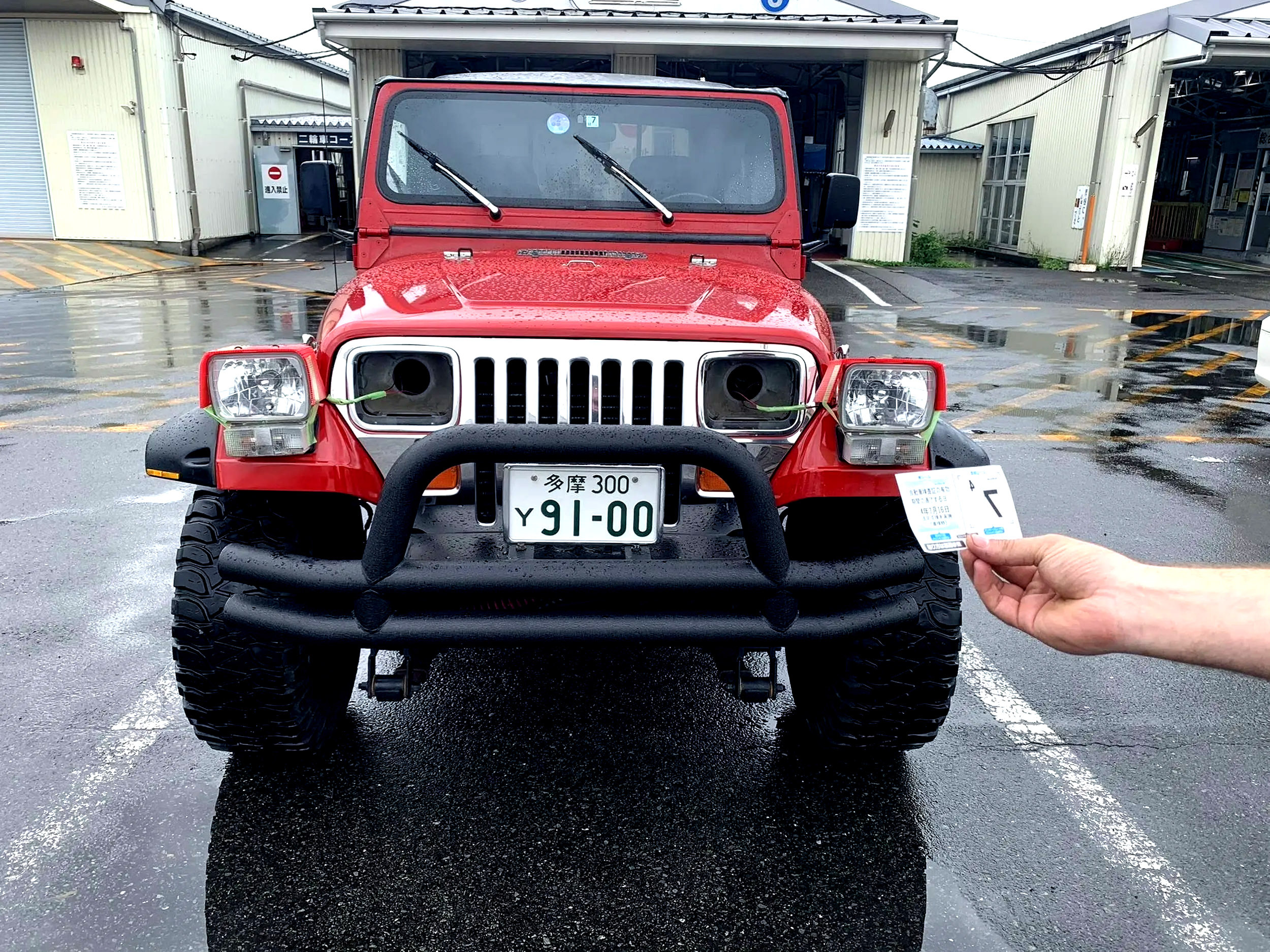
With the help of a friend, Matt unbolted the square headlights from the grille, leaving two empty sockets staring out of the front fascia. The pair then fashioned makeshift external housings out of cardboard, extended the factory wiring harnesses, and taped the headlight assemblies directly onto the fenders.
More: Jeep’s Indiana Jones Wrangler Only Exists For 20 Buyers, None In America
When they rolled the modified Wrangler back into the inspection lane, the staff’s first reaction was to laugh. The setup was approved anyway, since it technically complied with the headlight placement rules.
One Last Hurdle
The final challenge came at the end of the line, where a digital scanner checks beam alignment to make sure the lights won’t blind oncoming traffic. Wouldn’t you know it, one of the taped-on headlights registered as slightly misaligned. While the automated system was mid-scan, Matt’s friend dashed over to the front fender, nudged the cardboard box by hand until the machine flashed a passing grade, then slapped down another piece of tape to hold it in place.
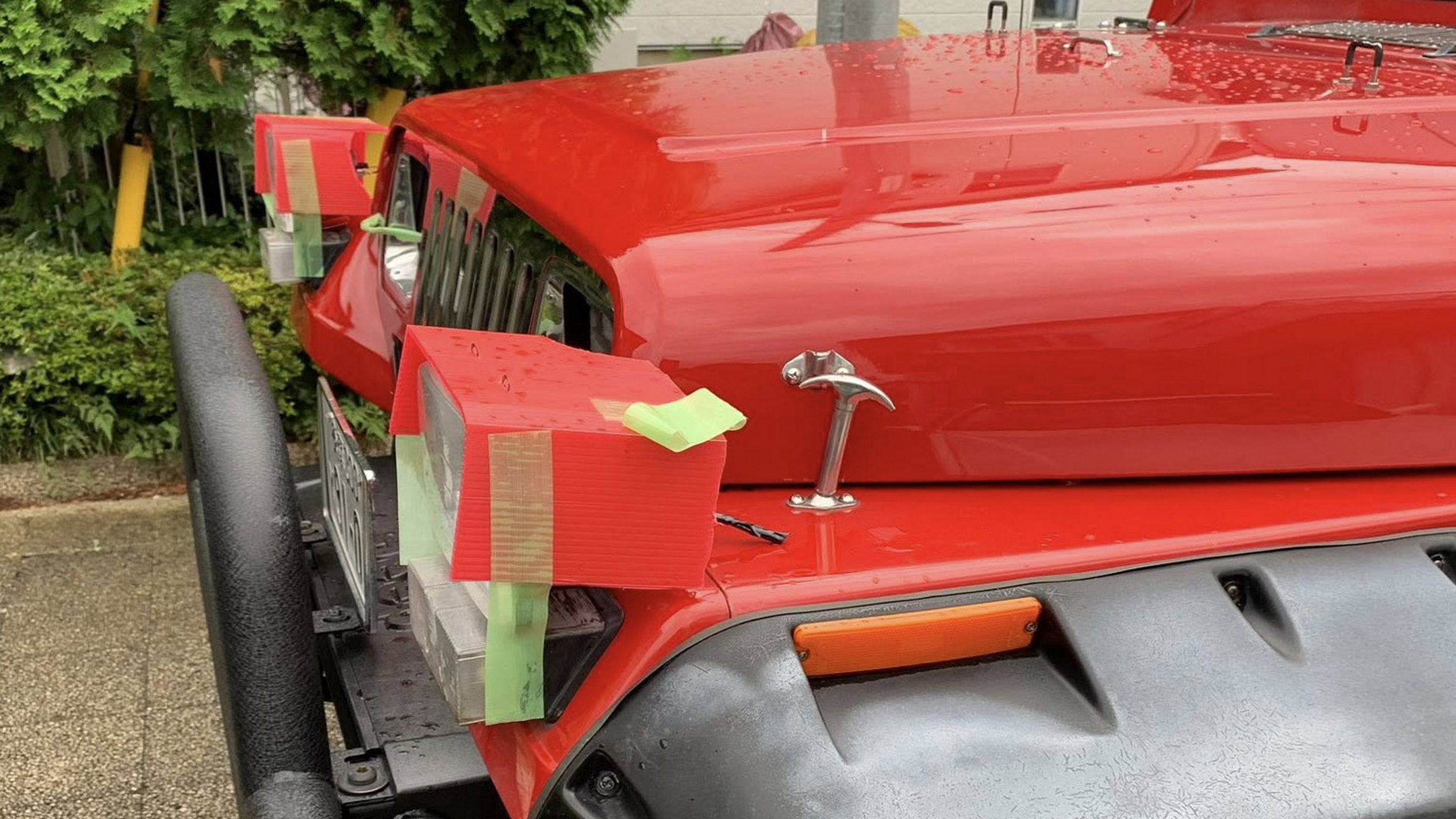
When the Jeep owner jokingly asked the inspectors how a temporary structure made of tape and cardboard could be safer than the factory setup, they just smiled and said they only follow the law.
More: Jeep’s SRT Comeback Is Bringing A Two-Door Hemi Scrambler With It
Predictably, the improvised rig didn’t last long. As soon as the sticker was applied, Matt pulled into a parking lot, tore down the taped cardboard boxes, and reinstalled the square headlights back in their housing where they belonged.
Matt has since relocated to Hawaii, where the family’s multi-Jeep garage keeps growing. Alongside the classic 1993 YJ “Buford,” the household now includes a 2012 Jeep JK Arctic Edition and a 2018 Jeep JLU driven by his wife. All three Wranglers run manual transmissions, since the couple are firm believers in three-pedal driving