- The Tesla Cybertruck tips the scales at 3,113 lbs, which is quite light for an EV.
- Recent Cybercab prototypes have been spotted with a steering wheel and pedals.
- The EV’s real-world driving range will likely be around 280-290 miles.
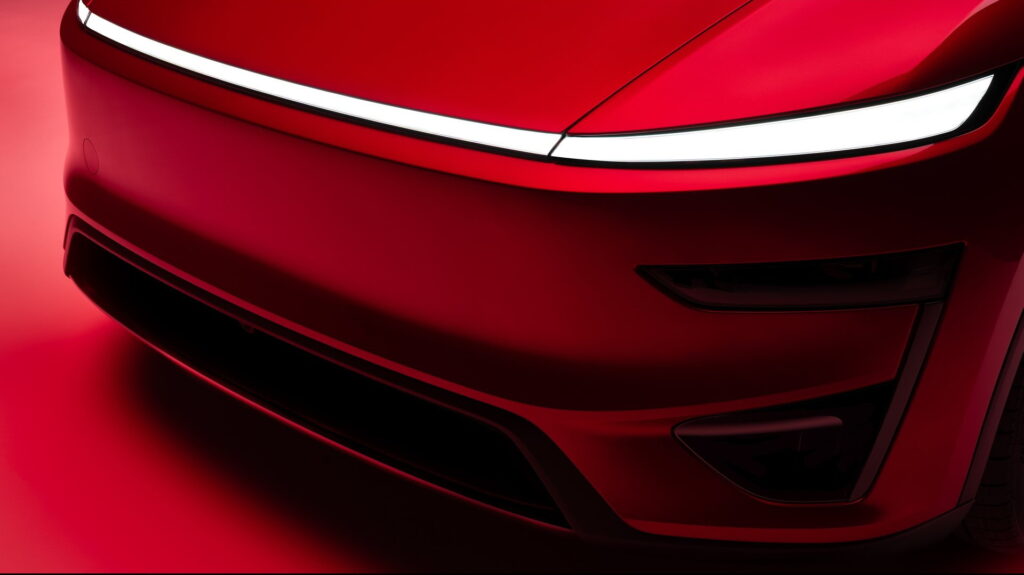
A growing number of Tesla Cybercab prototypes have been seen out and about in the US, and we now have some juicy new details about the EV. Not only is it light, but it’s also shaping up to be very efficient, not that this should come as much of a surprise.
Documents submitted by Tesla to the Environmental Protection Agency (EPA) reveal that the Cybercab tips the scales at just 3,113 lbs (1,412 kg), which is reasonably light for a modern EV but about what you’d expect for one with just two doors and two seats. That makes it roughly 700 lbs lighter than the lightest Tesla Model 3 currently on sale.
The EPA data also notes that it has a gross vehicle weight rating of 3,730 lbs (1,691 kg), meaning the payload capacity is 617 lbs (280 kg), enough for a two-seater.
Read: Tesla’s CyberCab Promises 300-Mile Range with Surprisingly Small Battery
Then there’s power. The Cybercab will be driven by a single front-mounted electric motor producing 219 hp. That’s nothing compared to something like a Tesla Model S Plaid, but the Cybercab has been primarily designed as a robotaxi, so it doesn’t need to be a performance car. The EPA documents don’t precisely reveal battery details, other than noting it has a 146-amp-hour battery operating at 326 volts, which works out to 48 kWh.
EPA filings also indicate an efficiency rating of 165 Wh/mi, making the Cybercab the most efficient Tesla revealed to date and potentially one of the most efficient EVs on the market.
What About The Range?



The Cybercab’s driving range will obviously be hugely important. Using the EPA’s calculated test cycle, the range is listed at 418.2 miles (673 km). Crucially, this is simply under lab-testing conditions and not a real-world figure. InsideEVs expects the real driving range to be more like 280-290 miles (450-467 km).
It remains to be seen when exactly the Cybercab will launch. Tesla previously said it’d land before 2027, but we’re now halfway through the year, and it’s unclear if that deadline is still achievable. It’s also worth noting that while the Cybercab was initially conceived exclusively as an autonomous vehicle, prototypes have been filmed testing with a steering wheel and pedals, so it’s reasonable to expect it to first arrive with human-operated controls while Tesla continues to develop its self-driving systems.