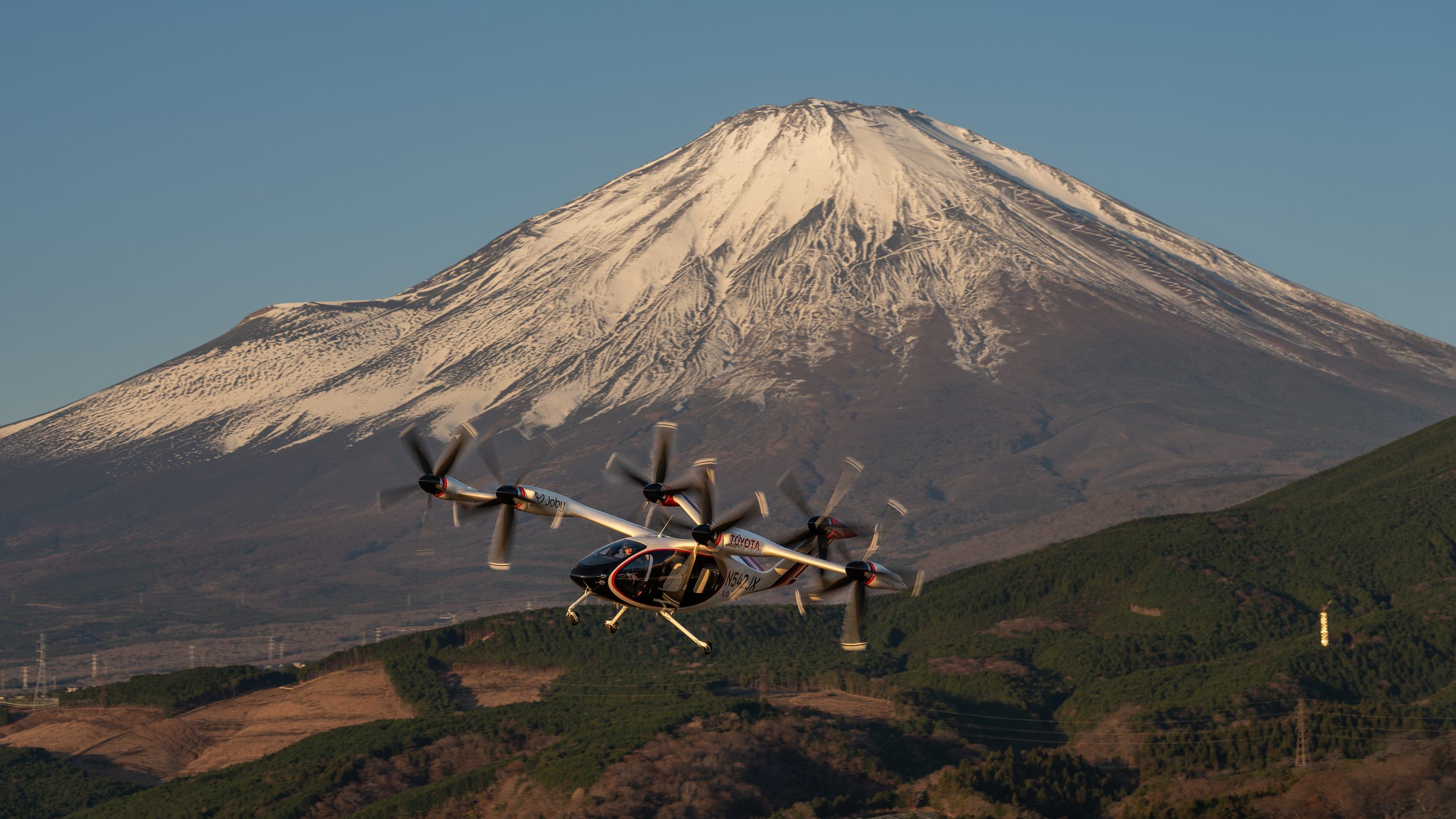
- Toyota and Joby Aviation are forming a new manufacturing joint venture.
- It’s focused on building an electric vertical take-off and landing aircraft.
- The model is designed to be an air taxi that can haul up to four passengers.
Toyota has been pouring hundreds of millions of dollars into Joby Aviation since 2020, so it comes as little surprise the companies have announced a “strategic manufacturing alliance.” The agreement will see the two firms establish a joint venture known as the Joby Toyota Aero Manufacturing Preparation Company.
While the name doesn’t exactly roll off the tongue, the joint venture will be based in California and Toyota will own a controlling 51% stake in the new company. The ultimate goal is to combine Joby’s “pioneering work in electric aviation with Toyota’s globally recognized expertise in production systems and operational excellence.”
More: Toyota Investing $500 Million More In Air Taxi Startup
The companies didn’t delve into specifics, but said the joint venture will initially be focused on laying the groundwork for commercial production. They’ll also strive for “manufacturing excellence, with particular emphasis on further improving productivity, quality, and cost.” More importantly, the joint venture will increase Joby’s production capacity and enable them to better meet the anticipated demand for their electric vertical take-off and landing aircraft.
Toyota Chairman Akio Toyoda remarked, “Since our founding, we’ve been guided by the philosophy of providing mobility for all. We see air mobility as a natural extension of that philosophy – from the ground into the sky – and as a way to bring new value to people’s lives and to society. It’s really meaningful for us to take on this challenge together with Joby, a partner that shares the same vision. We believe this strengthened relationship is an important step forward in realizing the future mobility society.”
As a refresher, Joby is focused on creating air taxis and aims to have a “seamless, end-to-end experience that connects ground transportation and air travel in a single journey” thanks to partnerships with companies such as Delta and Uber.
Their six rotor aircraft can carry four passengers and a pilot, and hit speeds of up to 200 mph (322 km/h). The model also has four batteries, rotating propellers, and multiple redundancies to enhance safety.