


- Independent teardown found widespread debris throughout a failed Toyota twin-turbo V6.
- Findings appear to support Toyota’s explanation behind its massive engine recall.
- Rebuilder says damage was so extensive that the block likely wasn’t worth repairing.
When Toyota announced it would replace entire engines in thousands of trucks and SUVs equipped with its twin-turbocharged V6, plenty of owners were skeptical. The automaker blamed machining debris left behind during manufacturing, but some questioned whether contamination alone could really destroy a modern engine. Now, a detailed teardown from Dave’s Auto Center appears to provide some compelling evidence that Toyota’s explanation wasn’t just corporate spin.
Metal debris in an engine is never a good thing, but decades ago, before manufacturing tolerances were as exacting as they are today, some engines could survive some debris without failing catastrophically. Today, automakers intentionally keep tolerances tight because it typically makes an engine more efficient. Of course, it also means there’s less room between bearings and other key components if debris gets in.
More: Another 127,000 Toyota And Lexus V6s At Risk Of Grinding Themselves To Death
Dave’s Auto Center teardown demonstrates this perfectly. At the center of the video below is Toyota’s now infamous V35A-FTS twin-turbo V6 engine, found in models including the Toyota Tundra, Toyota Sequoia, and Lexus LX 600. According to the shop, the seized engine arrived for inspection and a possible rebuild. Instead, the teardown quickly uncovered signs of widespread contamination.
As the front cover and oil pump were removed, the mechanics found metallic debris throughout the lubrication system. The oil pump housing showed visible scoring, while particles were discovered in passages feeding the timing system, camshafts, hydraulic lash adjusters, and other oil-fed components.
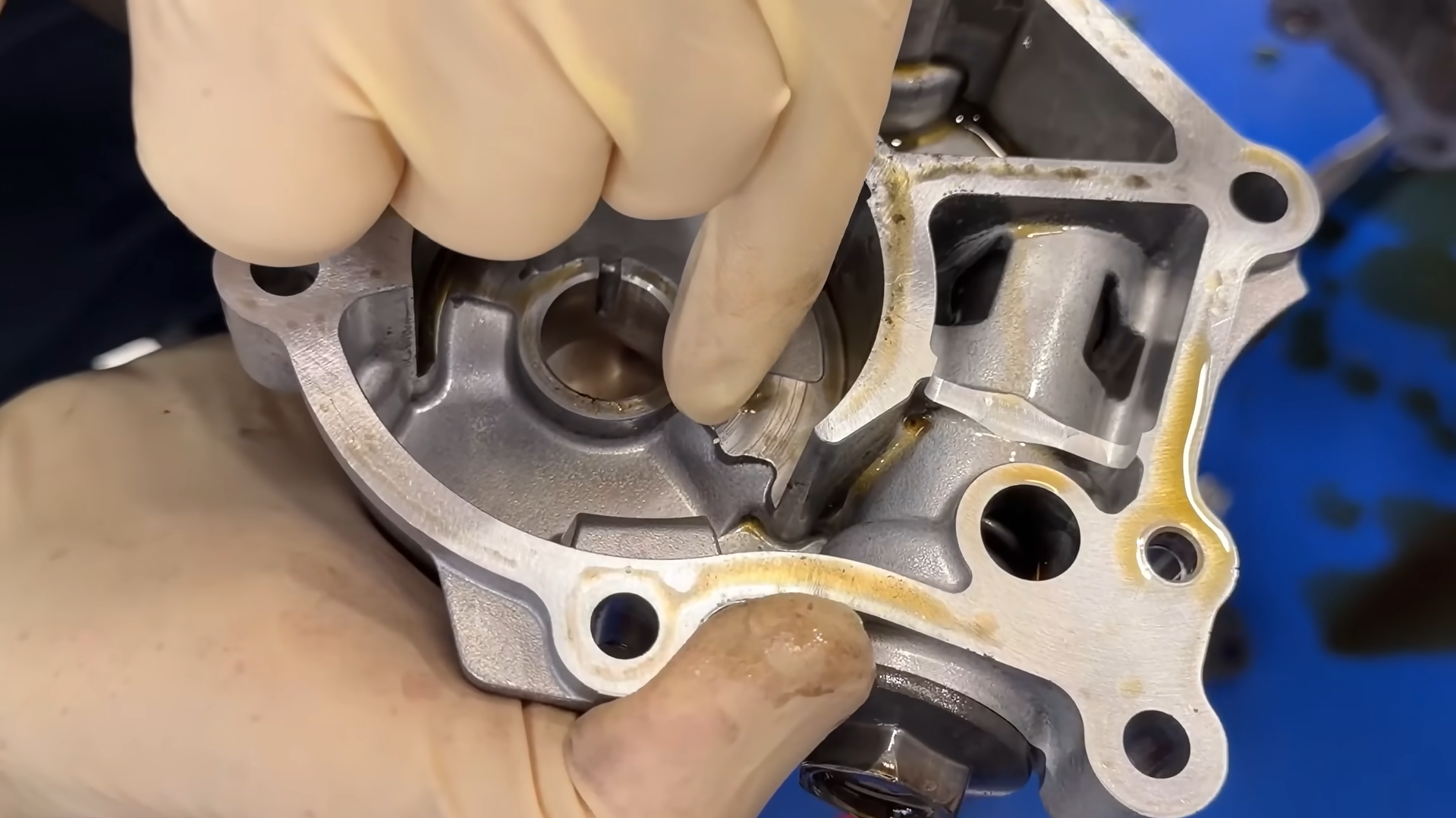
The shop repeatedly emphasized how little contamination it takes to create a problem. Bearing clearances inside an engine are often measured in thousandths of an inch, meaning particles that look insignificant to the naked eye can cause serious damage once they enter the lubrication system. In the case of this engine, things only got worse the more the shop dug.
The cylinder walls displayed heavy scoring, multiple bearings had apparently spun, and the crankshaft could no longer rotate. More debris was found throughout the engine, including in piston oil squirters designed to cool the undersides of the pistons.
Perhaps most notable was the conclusion reached after inspecting the bottom end. The mechanic stated that the engine’s main bearings had suffered enough damage that repairing the original block would likely require expensive machining operations, making replacement a more practical option.
Of course, this teardown represents a single failed engine rather than a comprehensive study of every recalled V35A-FTS. Still, it’s one of the most detailed looks yet at what happens when contamination works its way through a modern engine. If nothing else, the findings suggest Toyota’s original explanation may have been much closer to reality than many critics initially believed.